Monday, August 17, 2015

It's the Start of Something New

"What is the most important thing one learns in school? 
Self-esteem, support, and friendship." 
- Terry Tempest Williams

My new classroom set up
Originally, I was searching for an opening quote for this blogpost related to new starts and fresh beginnings. However, I happened upon this quote and decided it worked perfectly. This shall be my mantra for this year. I will not be focusing on the tests. I will not be focusing on data. I will be focusing on creating lifelong learners and strong relationships with my students.

Today was the first day of school. While I am exhausted, I am inspired and exhilarated. I read many wonderful books this summer, including Learn Like A Pirate, Teach Like a Pirate, He's the Weird Teacher, and Move Your Bus. I'm going to dedicate an entire post to the lessons learned from these four books in the future, but they made me look at my classroom differently*.
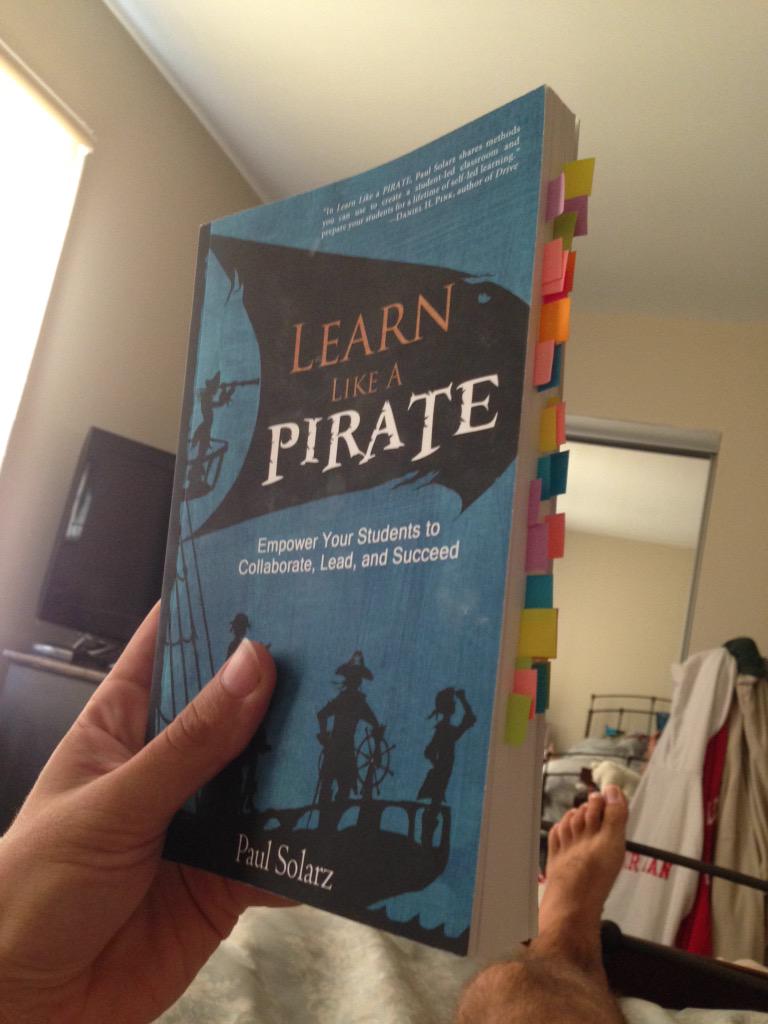
Inspiration from Learn Like a Pirate
First and foremost, I hit the ground running. I sent out a welcome video and information to parents a week before school started. The video introduced me (and my cat and superhero obsessions) and gave some insight into the coming year. I also called all of my students and spoke to them or left voicemail. This laid the groundwork for building strong relationships.

I also rearranged my classroom. I threw out all desks (including my own) and replaced them all with tables. This opened up and created a new look for my room. Time will tell how this works out.

Other changes include the environment and instruction. On the environment side of thing, I am going to give more responsibility to the students. This is largely due in part to the lessons in Learn Like a Pirate. We will also be flipping math class. Today, we discussed the concept of flipping, why we're doing it ("we can learn at home and work in school" - their summary,) and practiced taking notes from a video I recorded. I am excited for this new endeavor and will wrote a more extensive post later on this*. In addition to this, I just raised enough funds on DonorsChoose to get 12 more Chromebooks for my classroom. I am looking forward to being almost fully 1:1 and the possibilities it brings!

So there is a lot that is changing in my room, but a lot will stay the same. Relationships first has always been my goal. I focus on growth, both academic and individual. My standardized test scores may not be outstanding (nor are they terrible) but that doesn't matter to me. I will continually strive to make sure all 24 of my new students feel that they are a valued and critical part of this classroom. I said to them that we would become a family, and I intend to keep true to my word. 

*After proofing this post, I realized I alluded to
numerous future posts. Sorry! 
I will also continue to support the families of my students. I recently completed my Masters of Science in Curriculum and Instruction, and my research was all based on parental involvement. I investigated a first-hand look into the parent perspective of involvement. I am not a parent of humans (only a cat) and this helped me to understand their needs. I will use this to help meet their needs, through my continued HSCNs and providing the Flipped Videos. I also revamped my classroom website to maximize its efficiency and "user-friendly-ness" and created a Facebook (first time since 2011) to help meet the parents where they currently are. This support for parent will begin right away, with me holding a "Back-to-School Night" all about what to expect in fourth grade on Thursday. 

Positivity is my goal for this year. I want to make sure my students, the parents, my co-workers, and I am happy. Fly High Fridays are something I'll write about more later*, but essentially they are meetings to celebrate successes in our school. I'll be doing the Friday Five where I call five parents to share something great their child did. Too much of education is about data and tests and negativity and fixing run-on sentences (maybe I need a refresher.) 

I want this year to be different; hold me to it. 

What are your goals for the year? How will you celebrate success and build relationships?

Tuesday, August 4, 2015

Teaching the Big People

"Technology is supposed to make our lives easier, allowing us to do things more quickly and efficiently. But too often it seems to make things harder, leaving us with fifty-button remote controls, digital cameras with hundreds of mysterious features and book-length manuals, and cars with dashboard systems worthy of the space shuttle."
- James Surowiecki
Presenting on green screens in the classroom at LFCC
This will be the only picture today, sorry!

The above quote illustrates how I perceive some teachers view technology. While technology can simplify and improve one's life, it can also be very overwhelming. Without the proper guidance and support, one can become frustrated and shut down. I don't think that any good teacher wakes up in the morning and says, "I am going to refuse to learn this new tech tool because I don't want to." I think it has more to do with the fact that change can be hard if it is just thrown at someone without any real sort of support.

I consider myself a teacher in all facets of life. I don't limit my teaching to only students. I also made a conscious effort to help empower teachers in their effective technology integration. I do this in a number of ways, including informal support and holding professional development/presenting at conferences.

I've found that often teachers will have a great idea that they want to do, but aren't completely sure of what to do. Rather than just directing them to a place where they can find answers, I actually create the materials with them and assist in implementation in their classrooms. For example, another teacher wanted help setting up assessments in Google Classroom. After school, we worked on templates and then I came into her room to help her and her students with the Chromebooks and getting set up. Admittedly, this isn't the easiest thing to do while also having my own class to watch, but I felt that I was reaching the largest amount of students this way. I made it work, and now that teacher is more empowered to help her class.

Additionally, I have also presented at local technology conferences, including Googlepalooza, Google Mini, Lord Fairfax Community College Google Consortium, and others. Another way I have presented is through after-school professional development. Either way, I try to make it to be hands-on and interactive for the teachers who are attending. I want the time to be meaningful and helpful to them. I know when I attend conferences, I completely tune out to an hour of lecture. I don't want to do the same to my teacher-students.

I presented at Google Mini 2015 yesterday on using Google Draw for assessments. The night before, I was on TechEducator's 100th episode. Josh Gauthier and Jeff Bradbury had been discussing that at CUE Rockstar conferences, the lecturer cannot lecture for more than 15% of the total time they are allotted. I decided to try that for myself at Google Mini. I talked for 10 minutes of the hour I was given and gave the rest of the time for the teachers to work on the Draw templates. When I polled them at the end, I found that they enjoyed this format:
"I also appreciated that you treated us like we were adults and did not read every slide to us. You used your time well and were able to explain what to do as well as give us the opportunity to work with the information."
The oft repeated quote is that "teachers make the worst students." Is this truly the case? Or are teachers the worst teachers for other teachers? Think about your own classroom. Are you doing a lot of lecturing or are they actively working? Are your students they talking to each other, seemingly unfocused, or are they engaged in their work? Now apply this to technology conferences (or really any conference for that matter.) How many times are conferences just people talking rather than having their audience being active members of a conversation? We don't force our students to sit and listen for hours on end, why should we do this to adults?

That's not to say I am a perfect technology integration guru at all. I am formally trained in elementary education; technology integration is something I have taught myself. This past year, I volunteered for making parent feedback surveys on Google Forms rather than just doing them on paper how it had always been done. I told my principal I would design them and get all the teachers set up on this. I had committed, but didn't really think how I would do this. I decided on using my lunch and planning times to work with the 6 grade levels. Some grade levels were awesome. They worked with me on it and asked quality questions. They clearly saw the value and appreciated my efforts.

Other grade levels... not so much. One grade level was against the idea from the start, simply because they wouldn't see the value in doing it this way. Another grade level talked amongst themselves the entire time I was helping them get set up, and then bombarded me with questions afterwards. After that experience, I was very frustrated and decided to reflect upon the shortcomings.

One thing I immediately realized was that I may have been asking too much in too short of a time. My lunch is 25 minutes and sometimes I would try to fit 2 grade levels in there. However, since I am a classroom teacher and not a tech coach, that was the time I had to work with. Additionally, some teachers just have a very fixed mindset and won't try anything new. I can do all I can to assist them, but at the end of the day, change comes from within and I cannot force that.

What I could have changed was how I presented the information. I should have led with why we were doing this and how it would save time in the end. I had presented that "why" to the team leaders, but neglected to do it to each team. I also could have slowed down a little. I talk a mile a minute (my Voxer friends and listeners of the EduRoadTrip podcast can attest to this) and it only speeds up when I am excited about something. I also have a tendency to just do it for people rather than show them when I get frustrated. After becoming aware of the shortcomings, I worked to adjust future trainings. Slowing down may take more time but is more effective in the long run.

Looking forward, I applied to become a Google Certified Trainer. I have the new Google Certified Educator: Level 1 and 2 certificates, so this was the next logical step. I have also submitted a proposal for using green screens in the classroom for VSTE this year. I used to have aspirations of being a technology coach, but now I am not so sure. I know I would miss working with kids a whole heck of a lot. I would love to continue as an informal tech coach and maybe build to an actual title. No matter if I do it officially or unofficially, I will always keep the focus on providing individualized, hands-on instruction in my sessions.

I left a lot of reflection questions in an earlier paragraph, so I have just one for you at the end: What do you look for as you attend/present at technology professional development/conferences?

Sunday, July 19, 2015

Summer: For PD or not for PD?

"Summer is the annual permission slip to be lazy. To do nothing and have it count for something. To lie in the grass and count the stars. To sit on a branch and study the clouds."
- Regina Brett

Trip to the Governor's Palace in Williamsburg
Check out my awesome hat
When I was a kid (admittedly not too long ago) the above quote held true. I'd spend my days lounging around the house, catching fireflies, going to campfires, and sleeping until noon. In high school and college, I worked as a camp counselor, but that was essentially time paid to play on a playground. Summer was a magic time where responsibilities were short and the days were long.

And then I graduated college and earned my teaching position. Suddenly, summers took a hard right turn into another time to complete responsibilities. Today, I'll examine how summers are used by educators and my thoughts on the topic.

I'd like to start with clearing up a common misconception I have heard. Many people say that teachers "get the summers off." As will become evident in this post, I find this to be false. Many good educators will use their summer for professional and personal growth rather than a three month vacation. Obviously, there will always be exceptions to the rule, but by and large the norm is that educators use summer to hone their craft.

Presenting on Google Sites at Googlepaloooza
You don't have to take my word for it. Take a look at the numbers. ISTE is one of the biggest edtech conferences of the year and it takes place smack dab in the middle of summer. According to their statistics, over 21,000 various educators attended this conference from 76 nations. Although I sadly wasn't one of them, this is an incredible feat. This goes to prove that summer is spent learning by a large number of teachers, and this doesn't even include the #notatiste2015 crowd (which I was a part of!)

I personally have spent my summer learning and growing. Twitter has been hugely instrumental in this and providing a source of PD on my time. I attended and presented at Googlepalooza 2015 in Middletown, VA where I learned a number of wonderful technology tools. I'll be attending and presenting at some other professional development throughout the summer as well, which will serve as an entirely separate post later in the summer. I also recently attained the new Google Educator level 1 and level 2 certifications, which I found very applicable for the classroom. I'm also working on my Google Certified Trainer application, which will further my technology instructional and training practices. 

Using KidBlog in Summer School
I also spend my summer teaching summer school. I find this to be a highly rewarding experience and enjoy using the summer school class for piloting new ideas. This past week alone, we have tried KidBlog and TheAnswerPad, which I plan to use during my regular school year.

This summer and the last, I also have been working on completing my Masters of Science in Curriculum and Instruction through Western Governors University online. It is a flexible and self-paced program which I chose to accelerate. I am currently leading a research project based on parental involvement (a clear passion of mine) and the effect on reading and math achievement. This has taken up a large chunk of my past two summers, but it will be worth it when I finish at the end of this summer. 

My summer break is 58 days. Summer school runs for 25 of these days. Leading/attending professional development counts for about 5 days. I probably have spent about 7 full days working on various things for grad school. I often spend 4-5 days getting my classroom ready. When all is said and done, I have about 16 days left that are not filled with commitments for education.

Protecting my campsite
*the horse nor myself were not harmed*
So what do I do on these days that are solely for me? First and foremost, I relax. I grill and sit outside and just read for pleasure. That is one of the greatest joys for me in summer. I am a bit of a workaholic and have a hard time not working on something for teaching in my free time.

I also try to fit in vacation when I can. Last year, my girlfriend and I went to Gettysburg and Chincoteague. This year, we went to Williamsburg with my family and camping on Assateague National Seashore. Camping was a disaster that included high winds which collapsed our canopy, charcoal refusing to start, seagulls eating our food, and a severe thunderstorm that forces us to vacate our site a day early. I also enjoy hiking when I can. My girlfriend and I are moving in together for the first time, so that's another new and exciting adventure. Another big summer project is the new EduRoadTrip podcast that I have started with Mari Venturino and Greg Bagby. No matter what I'm doing, it's bound to be an adventure!

So what was I trying to convey in this post? Summer is a time for learning, but it is important to take some time for yourself. The vast majority of my summer is spent tweaking and perfecting different things for my classroom and growing as an educator. Even my vacations to Gettysburg and Williamsburg have delved into preparing for my social studies curriculum. Summer is a time when you can explore different ideas you wanted to, but couldn't find the time for in the regular school year. It's also a time for reflection. While I dropped down to a every other week format for my blog, it's really helped me to reflect on my practice. 

That being said, take some time off. 

Unplug. Unwind. Relax. Read for pleasure. See a movie. Go to the beach

As educators, it's hard to fully let go and do "nothing." You owe it to yourself. You've worked hard, reward yourself. 

Then jump back into it, refreshed and ready to go!

What do you think summer should be used for? How do you exemplify this?

Monday, July 6, 2015

Connecting Beyond the Curriculum

"I have no desire to see these kids as anything but my students. I don't want to go to their birthday parties, soccer games, or anything. I want to teach them and go home."

Winggirl and Mr. B
Her end of year quote: "You flew the whole way with me"
Shocking quote right? This was not something that came from my lips; it was a statement that a fellow
teacher made to me the other day. I highly respect and like this fellow educator, but was very taken aback by this statement. Between this quote and last week's #TMchat, I feel that a post on connecting with each student individually was timely.

I do not currently have children. Well, that's not true. I have 48 kids. None of them are biologically related to me, but I think of my past two years' classes as my own kids. Students often ask me who my favorite student is. I always respond, "You are." Their eyes light up as they exclaim, "Really?!" to which I respond, "You are absolutely one of my 48 favorite students of all time!"

Let's be honest, as teachers, we are inclined to have some students who may be seen as our "favorites" because they do the work, are well mannered, and not academically behind. I'll admit that sometimes I've fallen into wishing all my students were like that. Just as immediately, I regret thinking that. All students are unique and we have a responsibility to love and support them equally.

Working with Jack after school.
Notice his beaming smile.
Allow me to share the story of Jack (all names in this article will be changed.) He was actually removed from one fourth grade class and put into mine because the other teacher couldn't stand his "disrespect." Jack lives down the street from me. Last year, he switched schools and witnessed his five-year-old cousin pass away in a car accident. However, I never saw an ounce of disrespect from him. Did he complete his work in a timely manner? No. But do you blame him? School is a place where he was supposed to feel safe, and his teacher constantly sent him into the hall for "disrespect" (which I later found out was just refusal to do worksheets.) When I volunteered to take him in, I told my principal that my goal for him was not going to be academic; I wanted him to come to school with a smile and learn to love learning.

In my classroom, he thrived. No, he did not become a model student and did require some discipline. His background made him rough around the edges, but I never gave up on him. By the end of the year, you would always find him smiling and a book in his hand. At home, I'd see him coming down the street and run inside to grab a whiteboard. We'd spend an hour on my porch together working on math. His only complaint was when I would have to go back inside. That's success to me.

I pretend I don't like hugs
from Fiona
I work hard to instill this individual attention with each student. Every morning, each student in my class is greeted with a handshake. I welcome them into my classroom and ask how their weekend or night was. I also insist that they ask me how mine was. Not for some egotistical desire, but for them to develop good interpersonal skills. Some students asked for hugs instead of handshakes, and I generally would aquest to their request. Former students came in this year expecting the handshakes to continue. Other former students write letters back and forth to me. These are the long lasting bonds that make teaching worth it. 

Nicknames are a big deal in my classroom too. Some are as simple as their last name, but others get more complicated and involved as "Fern," "Winggirl," "Nissan," or "The Great and Powerful Polkasaurus Rex." Each nickname stems from a personal connection I have with the student. The other students may not know the reasoning behind the names, but they love their own nicknames and each other's. By the end of the year, you would be hard pressed to find peers referring to each other by their given name. I was even assigned two nicknames by the students: "Big Dog" and "King B." I'm not complaining about either one!

Each student also has a classroom job. This serves a dual purpose; it allows me to escape banal tasks and makes each student feel responsible for the well-being of the class. Each job, no matter how trivial it may seem, it's vital to the smooth running of the class.

Laser tag for Branden's birthday
Often times, I spend my weekends going to sporting events to support my students. I try to make it to as many as I can and it is totally worth it. The students seem to appreciate every time I come. I also try to attend birthday parties when I am invited. Just last week I went to a laser tag birthday party. You would have thought I was One Direction walking in there. The student was so excited and I got to just have fun with him and all the other students. I've gone to campfires, birthday parties, movies, and even taken students to historical reenactments with me (and even run into some at battlefields!) Seeing students outside of school can paint them in a different light, and form a bond that just can't be formed in the school building.

Pre-campfire selfie with Natasha 
I implore you; don't have the mindset of the teacher who said the above quote. We have to connect with our students. Education is changing, for better and for worse. One thing that needs to stay constant is the compassion teachers can provide. Some students don't have strong support systems at home. We may be the only positive interaction they may have. Imagine the difference you can have if you connect with the students if you connect beyond the curriculum.

What's your story? How have you connected with students? How do you plan to in this upcoming year?

Thursday, June 18, 2015

Year 2 Reflection: Looking Back to Move Forward

“We do not learn from experience... we learn from reflecting on experience.” 
- John Dewey

My start of school picture
I'm breaking custom with this post today. The focal point of this blog will not be about my students or about different classroom activities; it will be about the journey I have undergone this year. I have experience a number of changes this year: in instruction, in atmosphere, and in my connectedness. 

First and foremost, I would like to dispel the rumor that teachers have to plan once and reteach the same lesson year after year. After this year, I can concretely tell you that this is false. Yes, I reused some materials and lesson from last year, but by and large, I redeveloped my entire instructional delivery. Last year, I taught predominantly in whole group. I tried some small group, but got overwhelmed and stopped. I knew whole group wasn't the most effective way to teach, and I wasn't happy with that I had made an excuse. 

I decided over the summer to make some changes. I developed schedules, rotations, and activities to make it work more efficiently than my attempt last year. With procedures in place, it worked wonderfully! The students loved it and so did I. I taught reading and math entirely in small group format. It allowed me to target each groups' needs rather than "teaching to the middle." I plan to continue this next year, and to add some class flipping into the small group rotations, especially for science and history.

Math in small groups
Technology has always been my passion and I brought some technology into the classroom in my first year. However, I made it another goal to bring more purposeful tech integration to my classroom. This was another success. We used GAFE, green screens, Plickers, and many other technology components in useful ways. I would venture to say my students are among the most equipped in the school for working with technology in the entire building.

The school environment also underwent a huge change. Some were positive, such as gaining a new fourth grade team member who meshed incredibly well with my closest colleague and me. On the other hand, everyone, myself included, just seemed "off" and agitated all year. We did not do so hot on our state assessments last year and were in danger of losing accreditation. The stress about the risk of losing accreditation was palpable. I will be honest that I stressed about it for a few months, until I realized it was one test on one day. I was not going to let it rule my life. I wanted to provide a world of wonder and learning for my students. From that point, I always led with "is this best for the students?" This had a large amount of positive effect on the students, because all students made considerable growth from third grade.

Technology integration
I also took on more responsibilities this year than last; probably more than was wise to do. The HSCN experience was a large time commitment, but one that I feel was crucial. In addition to all of the responsibilities related to my full-time teaching job, I am enrolled in graduate school full time, was a cross country coach part time, and served on an autism services improvement team and a Google Educator consortium. This effectively meant I had little to no time to recharge during the week and had to leave my classroom every few weeks for meetings. It certainly wasn't easy keeping up with everything, but it was definitely worth it. It did come at a personal cost of being more highly stressed, but in the end it benefitted the students.

Probably the change that restored my sanity was becoming a connected educator. I had blogged on this at length earlier this year, but I continue to learn new things from my Twitter/Voxer PLN every day. These include wonderful members such as Rosy Burke, Mari Venturino, Greg Bagby, Stacey Lindes, Connie Hamilton, Mark French, Mark Bartmas, Richard Hattal, Kayla Delzer, and many other outstanding educators who I connect with on a daily basis. Becoming a connected educator has led me to many different viewpoints. Rather than having a handful of colleagues at my school, I literally have over 1,000 people I can reach out to at the touch of a button. I hope that my Tweets, Voxes, and blog posts help to inspire others as much as I have been inspired by them.

This has also led to different opportunities that wouldn't have otherwise been possible. Connie Hamilton nominated me for a Bammy Award for Elementary Teacher of the Year and I was featured on a few different websites, shows, and podcasts: Dr. Geniene Delahunty's Human Beacon, TeachCow Teacher Talk LiveSung Lee's Inspiring Educator Podcast, among others. This is not meant as a bragging moment for me; it just shows how reaching out can get your message out to the masses. Hopefully, by what has been said and written about me, I can help other teachers reach the maximum level of effectiveness. 

So what's next for Mr. B? This upcoming year, I decided to step down from cross-country coaching so I
My 2014-2015 class
can focus on my classroom more. My graduate degree should be completed by September. I will continue to grow as a teacher and a learner. One goal I have is to help others more effectively integrate technology into their classroom. I applied for a job as a technology coach, but was denied an interview. This will not deter me. I plan to set up "Technology Tuesdays," (an idea I got from Chris Nesi's podcast) where teachers would be invited to join me in my classroom for 15 minutes in order to learn a "tech tip they can learn today and use tomorrow." I think this will be a great way to slowly introduce tech to teachers. I'll continue offering more traditionally technology professional development as well, which will serve as the focus for another blog later this summer.

I will also be starting the EduRoadTrip podcast this summer with two members of my PLN. This podcast will be a great way to celebrate education in a fun and engaging way. Social media will continue to play a key role in my growth, and I aim to use Twitter and Voxer in the classroom more.

Next year will bring many changes personally and professionally. I hope to continue to instill a love of learning in my students and begin flipping the classroom. As an end-of-year activity, I polled my students about how they felt about this year. You can view the full responses here, and I'd to close with one of their thoughts: 

"[Mr. B] was fun about our learning and didn't just put worksheets in our face he took his time out of his free time to make fun things for use. He mixes math with VA Studies. He makes us laugh."

How was your 2014-15? What were some of your successes? What are some goals for next year?

Friday, June 12, 2015

Readers Cafe: Nourishing the Mind and the Body

"Welcome to Readers Cafe. We have amazing readers waiting to read to you and awesome snacks too. We hope you have a wonderful time. May I show you to your seat, sir?"

Readers Cafe in action
What is Readers Cafe? In a nutshell, it is a student-run restaurant that serves both snacks and books to its patrons. It exemplifies the CS Lewis quote:

"Eating and reading are two pleasures that combine admirably"

The opening of the restaurant is the final goal, but as is often the case with learning, it's more about the destination.


Practicing the books
I cannot take full credit for Readers Cafe; it is a concept that I adapted from the student teaching cooperating teacher. Due to state testing butting up to the second to last day of school last year, I wasn't able to do it then. However, this year we had two weeks between state testing being done and end of school year. As soon as I realized this, I approached my principal about doing it this year. She had remembered it from my original interview and agreed. She also agreed to fund the supplies and food needed!

Before even thinking about opening up the Cafe, the students had a lot of work to do. I partnered them up, trying to build new friendships and keeping reading levels heterogeneously mixed. From there, each partnership chose three picture books. I told them that all three books should last no less than twenty minutes together, but there would be no maximum time. For a few days, we practiced just reading the books, focusing on fluency, pronunciation, and expression.

Note the questions chart
The next step was to develop comprehension questions about the story. Questioning is a great way to develop higher level thinking skills. I instructed and modeled beginning prediction questions, one literal and one inferential question each for the middle, and one summarizing/evaluating question for the end, for a total of twelve questions. The only requirement was that the questions couldn't be answered with a simple yes or no. On Google Classroom, I shared a matrix so they could type in their questions. After developing questions, the students continued working on their fluency and practiced asking the questions.

Following this practice, we began on working on the Cafe jobs. There are four jobs in Readers Cafe:
Host greeting our principal
  • Host - Greets the customers, shows them to their seats, keeps track of time, and dismisses the customers. 
  • Waiter - Takes the orders from the customers to the chefs and brings it back. They also help in dismissing the customers.
  • Chef - Fills the orders (goldfish, pretzels, and animal crackers) when the waiters bring it to them. They are also responsible for making sure the food bowls stay filled.
  • Bus Person - Clears the plates after the customers have eaten, washes the dishes, and returns it to the chefs. They also fill in if a host or waiter is absent.

Waitress helping with an order
Chefs filling the snacks
After detailing the jobs, the students picked what jobs they wanted. Amazingly, every student got their first or second choice. I also told them they had to develop their own systems for their jobs. The hosts developed this opening and closing and which sections they would be seating, the waiters developed this waiter pad and which sections they served, and the chefs and bus people determined who would be in charge of which snacks and sections, respectively.

Busboy rinsing dishes
I had twenty two students this year. This means that while eleven of the students (one student from each partnership) were reading , the other eleven (the other student from the partnership) had jobs. We alternated between round one and round two. When they finished their job, they would read quietly or assist other students.

Finally, we were ready to practice everything together: the books, the questions, and the jobs. We used two of my close friends' classes for this and it helped us to highlight weaknesses and strengths. A big strength we noticed was that the systems worked wonderfully. The biggest challenge was keeping the customers focused on the reader. We implemented a "tap the desk, say their name, ask a question, get Mr. B" system to help manage the attention. During the real event, I never had to step in to help get a customer under control. It was amazing to see them solve inattentiveness issues and hopefully it gives them an higher appreciation for teachers!

Family Day at Readers Cafe
Our final practice round was with the families. The Friday before the school-wide event, I invited the families to drop in at any point at the end of the day. We had to make a modified schedule to account for this, but it was clear we had all systems down pat. I even asked the parents to get off task to test how our "tap, name, question" system worked.

Reading to our Head of Instructional Technology
About two weeks before the school-wide event, I sent out a Google Form with a reservation form to the staff in the building. I used a really awesome add-on called Choice Eliminator that make it easy to make sure no one was double booked. It worked pretty well, aside from two minor issues. I also invited the Assistant Superintendents and other members of the School Board Office to attend at any time during the three days. We ended up having seven join us!


Teacher getting into the book
Monday came and Readers Cafe began. We had decorated with a patriotic theme, including red, white, and blue leis for the customers, flag print tablecloths, and other adornments. Each class was given twenty minutes to be seated, served, read to, and lined back up, and we had five minutes in between to switch rounds. Truth be told, aside from announcing which round we were doing, I basically sat there and did nothing. The students ran it all, from seating to serving to clearing to dismissing. The teachers had a choice of being sat in my comfortable recliner or with a reader. Many started on the recliner, but ended up inching closer to the nearest desk! 

The feedback I received from the customers was great! The students seemed to enjoy the books and the snack, the teachers said it was a cute and awesome experience and commented on the outstanding fluency and expression, and the School Board thought it was a great way to end the year. I saw a lot of great things: critical thinking questions, improvements in fluency, leadership roles, problem solving, and hard work. My students loved feeling in charge of the Cafe and I loved seeing them take ownership of it. My students begged me to do it again next year, so they can attend it as a customer!

Now that you've read this post, check out what we updated in 2017 here.

You can watch a video overview of Readers Cafe above.

Friday, June 5, 2015

Show Me Your Genius

"Genius is the ability to put into effect what is on your mind."
F. Scott Fitzgerald

Researching
UPDATE: After reading this piece, please check out the second posts in this series: "Genius Hour: An Update."

In modern-day education, choice is not often relegated to the students (or the teacher in some cases.) But what if choice about what was learned was given to the students? Would they be more engaged and take accountability in their learning? Or would they run amok?

After engaging in a Twitter chat in mid-March, I learned about the concept of Genius Hour. For those of you who have never heard of this, it is based on Google's 20% Time, wherein employees are to use part of their work week on a passion project. This has become a major movement in education. I decided to give it a whirl.

After selecting the last hour of the day on Wednesdays, my class and I launched into the process. The first day they brainstormed topics. I told them that it could be anything that was school appropriate. "Mr. B, does it have to relate to Virginia Studies?" I was asked. "Nope! It can be anything you want to learn more about." I also dropped a mind bomb on them - this project would not be graded. I asked them if it should change their effort level, and thankfully they said no. The students put two potential topics into a Google Form and I approved one of them. Topics ranged from Civil War battles, to pyramids, to sports, to Kid President, to science and animals, and many more. One student even chose me as her topic!

The following day, we set expectations, outlined a calendar, and discussed note taking. Our expectations were:


The students came up with expectations 2-4, and I insisted on number 1. I felt they would maximize their time best if they had objectives to meet each day. They set their own objectives and adjusted accordingly. We set up a rudimentary notetaking system: the notecards needed the website they found it from, the date, and the words summarized in their own words. This effectively acts as a lead in to later research projects in middle and high school.

We allotted a few weeks for research, a few for project building, and a few for presentations. As the year progressed and our state testing began, we had to tweak the schedule. All the presentations were condensed into one day rather than three days, but we still had plenty of time.

The students loved Genius Hour! They often asked me if they could work on it in free time (yes!) and at home (absolutely!) Wednesday afternoons were held sacred; it was a travesty if we had to cancel for some reason.

Tech help
My biggest fear going into it was that the students would hear it was not a grade and just blow it off. They surprised me and did the complete opposite. I would venture to say they worked harder on this project than any other project. My involvement was minimal in the entire process. I very rarely had to intervene for behavioral reasons (due to their motivation and engagement) and just helped guide them to helpful websites. This also led to a good discussion of the value of .gov/.edu sites versus Wikipedia, another lesson that will serve them well in life. I would keep track of time for them and provide technical support along the way. The nice thing was that once I taught one student on different Google Drive or research tips, I could direct other students to that student for help. Essentially, I was a ghost on Wednesdays from 2:00-3:00 (ghosts was another topic!)

Creating an Egyptian pyramid
The students came up with various different projects. The most popular one was a Google Presentation. Students worked with each other to edit the text and format their designs. One student added in transition effects between slides, which I had not even taught him to do. I was very impressed with his drive to find more about Drive.

Aside from Presentations, some students made dioramas/models. The students completed these both in class and at home, and created some incredible models! Other students made traditional posters and some simply read an oral report to the class. No one project style was the same, nor was any one better than the other. The wide variety of choice allowed all students to shine. 


On presentation day, I went in "volunteer order." Amazingly, all but four students voluntarily presented before I had to start flipping coins for the next group. This is a huge shift for our class, who didn't start out as completely comfortable presenting in front of each other. Students seemed to enjoy running the SmartBoard and presenting their new found genius. Many students presented without a script, which was impressive in and of itself. You can watch all of their presentations to the left.

I added in a question/answer segment at the end of each presentation. This helped to show the full understanding of their topics and helped me to learn more about my students and their interests. The most commonly asked question was, "Why did you choose that as your topic?" The answers were all very similar:

"Because I knew something about this 
and wanted to learn more."

That is the kind of attitude I want to foster in all my students. Have some background knowledge and the desire to expand upon it. This innate love for learning and curiosity will serve them well in life, more so than any test or mandated curriculum will.

My 2015 Fourth Grade Geniuses and Topics:

Amber/Pyramids, Liam/Blackhawk spy plane, Anisa/Ghosts


Faryn/Volleyball, Mason/Sons of Liberty, Clara/Current Events


Natalya/Harriet Beecher Stowe, Mason/Video games, Johnny/Sharks 


Sophia/Soccer, Grace/Kid President, Trey/Gettysburg


 Brayden/Battle of Shiloh, Madison/Owning a Business, Connor/Sea Creatures


James/Obsidian, James/Bacteria, Chris/Publishing a Book


Josh/Birds, Logan/Anotonov 225, Tucker/Wilt Chamberlain


                                                                                                 Hailey/Mr. B

Have you ever tried Genius Hour? If so, what were your major takeaways? If not, what's stopping you?