Showing posts with label Math. Show all posts

Saturday, February 3, 2018

Digit Detectives: Student-Created Number Talks

“Since the heart of number talks is classroom conversation, it is appropriate for the teacher to move into the role of the facilitator.”
- Sherry Parrish

AUTHOR'S NOTE: Before reading this piece, I strongly suggest you read my original number talk piece here. After reading it, come back here to read about the next level. 

A critical part of our daily math routine is beginning with a number talk. As a brief recap, they're 10-15 minute experiences where students are presented with a math prompt and have to work out various solutions using only mental math. Most number talks can have more than one answer and follow similar formats. Various norms (such as hand signals) are established to ensure that the experience runs smoothly.

Leading the tape measure Estimation 180
One thing I am very passionate about is giving students ownership and control over their learning.

They already write the weekly newsletter, lead our daily morning meetings, and help develop flipped classroom videos. In reflecting on where I could turn over more control to my students, I realized they could run number talks.

Teacher's assistant (the student who basically acts as a miniature version of me) is a highly coveted classroom job in Room 31, and it felt like a natural place for passing off the task. Once other students saw the teacher's assistant running the show, they begged that person for a chance. I'm always impressed by how gracious the teacher's assistant is in allowing others to have a chance.

The number talks all follow certain patterns and routines, based on the specific type (see the original blog post for an explanation of the types). One type that I didn't explain in the original post was Estimation 180. This is a fantastic website where various pictures are shown and students must make estimations based on other information in the picture or previous days' information. For example, a student recently led a five-day long continuous number talk about tape measures, in which a new, larger tape measure was introduced every day and the students had to estimate the new measures length.

Before and after students lead a number talk, I conference with them about what I'll be looking for while they lead. I want them to reinforce the norms and to push student on their thinking, which often times can be as simple as asking, "Why do you think that?" I encourage them to model it as if I were given the number talk.

A physical plan before
I converted it digitally
Generally speaking, I open up that day's number talk from this Google Slidedeck (feel free to make a copy of it) and turn it over to the student. As I do while I'm leading a number talk, I stay out of it and let them run the show. On occasion, I will put my thumb up (indicating I have an answer I'd like to share). Sometimes I will give a "correct" answer and model my thought process, and other times I will purposely give a wrong answer and see if other students catch it and use the disagreement signal (raising their hand). Spoiler - they usually do and love saying, "I disagree with Mr. B!"

While allowing students to lead number talks are great, they're still basically regurgitating information I'm giving them. I want them to be creators and true leaders of their learning.

I decided to ask the teacher's assistant for the month of January to start developing some of her own number talks, based on the "Mystery Number" and "Balance the Scale" format (again, see the original post for in-depth explanations).

Full disclosure - this girl is literally the shyest girl I have ever had in my entire teaching career. Asking her to lead number talks was one thing, but creating one was a whole new ball game. Nevertheless, she stepped up and developed both in a matter of minutes. Since I store all of my number talks on Google Slides, she wrote it on paper and I quickly converted it to digital.

She absolutely rocked it. I really wish I filmed it, because she did a great job. Her first talk was based on balancing the scale for the value of 12. In addition to her choosing an ideal number (since 12 can be created so many different ways depending on the operations used), I was absolutely floored by the responses of her classmates. We have been working on polygons, and one student said, "hexagon plus hexagon." This opened up further polygon-based discussion, which brought a single tear to my eye.

 Leading his own "Mystery Number."
Immediately, former teacher's assistants asked if they could retroactively make some. Of course, I wasn't going to turn them down! The following day, a student created and led another "Balance the Scale," while another did a "Mystery Number" later in the week.

If you're planning on trying this with your students, I definitely recommend beginning with the two formats I began with (Balance the Scale and Mystery Number), in addition to "Which One Doesn't Belong." These seem to be the three easiest to develop and lead to rich discussion.

In the future, it would also be cool for students to begin developing some talks in the Estimation 180 set up. This would take a bit of prep work ahead of time, as this would require students to take pictures at home and send them to me. Who knows - this may be on the docket for my February teacher's assistant!

Sunday, December 31, 2017

I Stepped Back

Around this time of year, EduTwitter is flooded with end of year reflections, goal setting for the next year, and #OneWord blog posts. I even did one in 2015. I contemplated writing one for this year and went back and forth on it for a few weeks. As I sit here on New Year's Eve day, I suppose this serves as an end of year reflection post.

Students working together to create a new flip video
To be quite honest, I have not done anything "new" in my classroom this year. Many of my mainstays have remained constant, but analyzed to a higher degree and implemented better. Most notably, my ability to do flexible grouping in small group instruction has improved. I regularly switch up my math groups as we enter into new units, based on informal pretests. Right before we let out for winter break, I assessed all students' reading progress through Fountas and Pinnell and will make some changes to groups as we begin 2018. I've been fine tuning my flipped classroom videos instead of just recycling old ones, in addition to having students create videos for their classmates, which was something I never got around to last year.

Technology integration continues to be a focal point of my classroom, but with one major change: I am no longer 1:1 Chromebooks. I have to share a Windows laptop cart with another teacher. At first, I hated it, but now I am learning to embrace it, though I do still hate how slow the laptops are. It forces me to be more intentional in how I am using the technology, which is always a good thing.

I've used Breakout Edu boxes and digital games, a handful of HyperDocs, and other things I love using while teaching. I continue to connect with my students on a regular basis and truly love my class and all their unique qualities. The families are very supportive this year and engage through Remind frequently. Within the walls of my classroom, things are par the course, which is totally ok with me.

A major change has occurred outside the school building in my life. If you're a regular reader of Mr. B's Blog, you may have been disappointed to see that there was only one post published this school year. Technically speaking, that wasn't even a new post; it was a holdover that I just published late. Besides not blogging about education, I've also stopped tweeting about education. In November 2017, I opened a new Twitter account for educational tweets, but really don't use that one anymore.

However, I haven't stopped writing entirely - I just write about a different subject matter now, namely men's health and testicular cancer awareness. As you probably know, I was diagnosed with cancer about a year ago, underwent chemotherapy for three months, and was cleared in remission in March 2017. I've been sharing my journey at my testicular cancer awareness blog, A Ballsy Sense of Tumor. My original Twitter account was retooled to focus on testicular cancer awareness. As always, I highly encourage you to check out both the website and the Twitter.

Is this to say I am not passionate about education anymore? No. I certainly still have very strong feelings about education and what needs to improve about it, but I'm focusing my energy on what I can do in my own classroom with my own students in my school. Those kids deserve my 100% effort while I'm there and I will give them my best. Furthermore, I needed better balance in my life. Education was my day job and my night hobby. EduTwitter was turning into an echo chamber, with platitudes and more of the same, and losing its luster with me. I needed to make a change.

There are literally hundreds of thousands, if not millions, of teachers who are tweeting and blogging about education. I don't feel like the community needs another voice, least of all mine. This isn't a vie for headpats or attention. I know I have some cool ideas, but writing about it and endlessly promoting it isn't necessarily how I wanted to spend my time anymore.

While there are countless educational blogs, there is a huge lack of testicular cancer awareness sites. In writing about my experiences and raising awareness, I've found a passion that does not relate to my profession (although I do have a project in the works that blends the two, so stay tuned) and I feel it has improved me as a person to have separate interests. It makes me a more well-rounded person and a real individual.

If education is your job and also your hobby, I'm not disparaging you. If it works for you, that's awesome. This is what works for me. I'm also not saying that I won't be writing or tweeting about education ever again. I still have over half a school year to go, and some ideas are swirling around that I want to try out, and may write about when the mood strikes.

So this is probably a different kind of end of year post than the norm that is being shared on Twitter today, and I am well aware of the irony that I'm writing a post about not wanting to blog about education and then tweeting it out. For now (and the foreseeable future), I've made the decision to spend my non-working hours working on my own passion project and dedicating my time and energy into doing a different form of good.

When it comes to educational blogging and social media,

I stepped back.

Sunday, July 30, 2017

My Take on Flipped Classroom

"The flipped classroom is not about the videos! It is about how you re-envision class time." 
-Jon Bergmann

I've done a flipped math classroom for the past two school years and absolutely love it. I also train other teachers on how to do it in their classrooms, and the above quote basically summarizes how I open sessions. 

The technology with a flipped classroom is easy and can be learned in literally five minutes or less. I personally use Explain Everything on my iPad to create the videos, upload them to YouTube, and have a playlist of all videos embedded on a Google Site with a Sheet detailing which videos my students are to watch. That's the extent of the technology involved, and you can easily replicate that in your classroom.

However, there's much more to it than just making videos and assigning them for students to watch at home. (You can do an in-class flip, but I've done an out of class flip and it's worked beautifully for my students. Do what you feel is best for yours.)

The Buy In

Practicing a flip in class
When talking with administrators, have a plan. Mentioning the technology is important, so they know you have given thought to the logistics, but I lead with the why. Math standards get more rigorous every year, with content added constantly. It's hard to properly introduce new material, provide time for guided and independent practice, and assess all in the timeframe of a school day. Illustrating the benefits will help the admin to accept this idea, and it's great to back it up with data.

After getting the go ahead from my administrator, I next discuss it with the parents. Ideally, I do this at a formal Back-to-School night, but the information is always available on my classroom website, too. When introducing it, I explain what's expected of students at home (explained more in "The  'Homework'" section) and the benefits to both the student and the parents. Benefits to parents include that they can be consistent with what methods are being taught in school, there's less frustration involved (saying, "Go watch your flip video" is less likely to cause a fight than "Go do your worksheet"), and it empowers the parents to have a modeled practice of how to do math. Nine times out of ten, when I have a parent who says they were "hate math," it's because they are fearful that they can't do the math their child can do. A flipped classroom also helps tremendously with communication between the teacher and the parent. The parent can tell you specifically where the student is getting stuck rather than "He doesn't understand decimals."

Be prepared for some pushback from parents and/or admin. It's something new and they may not fully grasp it. Be open and flexible. I generally ask for ongoing feedback about flipped classroom to the parents in my classroom and they seem to appreciate that. Prepare to overcome some challenges, and you may be pleasantly surprised if none occur. 

Finally, after talking with the adults involved, I lay it out to my students. This is usually the easiest step. I tell them their math homework for the year is going to be to watch YouTube. Once the cheering dies down, I add that it's math-related, which is slightly less exciting for them. However, I then shift into why it's going to be helpful for them. I play up the fact that they can learn at their own pace by rewinding certain parts, pausing, and even rewatching the whole video multiple times over. I share how I nor anyone else in the class will know if they understood it after one watch or sixteen views, which saves them some dignity if they are a student who has traditionally struggled in front of their peers for years on end. The flipside is also true - if they get it after one viewing, they don't need to rewatch it and be bored to tears. Buy-in from the students is usually the easiest to gain, especially if they know you're doing it in their best interests. 

The "Homework"

Like I said, I do an out-of-class flip. I check with parents for access to Internet and devices and I've found that they always have some access. Just in case, I do have backup plans ready (they do it in class during a math rotation or direct them to a public library).

At home, the students watch the videos. I produce all the videos myself, because I can tie it into my students' interests and the methods I'm teaching in class. My videos aren't super awesome, but they reflect my personality and teaching style that my students get in class. I keep them under 10 minutes so if a student needs to view it numerous times, I'm respecting their time. Rewatching a 20 minute video quickly turns into over an hour of work.

Sometimes, students create videos during class and then I assign them to the class for homework. I'll expand on this in a later post.  

The videos all follow a "I do, we do, you do" structure. I introduce and model the concept, and then give them another problem and ask them to pause the video. Once they've solved it, they unpause and I magically finish it out. The videos conclude with a "Bring Back to School" problem, which has no provided answer. This is what I'll be checking in the morning and help me create my groups. 

Practicing taking notes
While the students watch the video, they take notes. I don't provide outlines or fill-in-the-blanks because I want them to write down what they feel is important. The rule of thumb I tell them is if I write it on my screen, it should be on their paper. They know not to try to write down everything I say, because Mr. B talks a lot and goes off on tangents. 

We practice taking notes as a class for at least three weeks before they're doing it completely independently at home. Each week, we shift from in class practice to more at home, and I find this scaffolding really helps. 

What if a kid doesn't do his video? This is the most common question I get when doing a training session. If this happens, I ask them if they didn't do it at all or forgot to bring in their notes. If it's the latter, I ask them to bring the notes the following day. If it's the former, I give them a choice: do it during math rotations or do double tonight. Generally, most students choose to double up and it's a rare occurrence for repeat offenders.

The Instructional Shifts

When my students come into our classroom, I check their notes for the "Bring Back to School" problem. This is my first indication of their grasp of the prior night's video. However, it could be their siblings' or parents' work. I also usually have them solve a problem about the prior night's objective, either on paper, a whiteboard, or Google Form.

This helps me group the students. If a few students misunderstanding a specific element of long division, I can work with them on that rather than the spray and pray mentality of giving everyone the same instruction. I can really focus on what the students need to best address their learning.

That's the power of the flipped classroom. I rarely introduce a new concept in a whole group lesson, since the video is the whole group lesson. Instead, we're using our math time for number talks and math stations. In our 90-minute math block, we're able to do a fifteen minute number talk, and three 25-minute rounds for math stations. These stations include meeting with me, hands on work, collaboration with peers, and technology based stations. Some stations are standardized, with the ability for the student to self-adjust based on their perceived level of difficulty, while others are individualized specifically for that student.

The bottom line is that with a flipped classroom, class time is no longer used for passive learning - it's all active while they're in the classroom.

The Results

We always need to look at the validity of using new instructional methods beyond "it's cool and shiny and the kids will love it." Not much research exists on flipped classroom yet, but I have two years worth of data to support it. In both years, my students experienced large gains in their end-of-year state exams (comparing third to fourth grade), both in average score and class pass rate. My first year of flipping saw about a 20% increase in passing, while both years have seen a 30 point gain. 

While data is great for admin, it's just as important to check in with parents and students to see what they felt. I'll close with a sampling of their responses.

Parent responses:
  • Flipped videos have made a huge different to my child, he struggles with reading but is much better at math. The flipped videos allows him to do math without the struggle of reading, he can view a video for as many times as he would like. 
  • An added benefit is that I can watch the video and help him, I have realized that I actually remember more then I thought from my days in math class.
  • Taking notes is a skill that he is developing as he is watching and he is not surprised by what will asked of him the next day. The videos are short and not overwhelming and it makes it way more fun to do it on the computer.
Student responses:
  • I think it is a lot more fun instead of taking home a worksheet you get to watch and video and it makes learning easier.
  • It is fun because he includes things we like.
  • I like flip notes because you cannot use the excuse of you lost your worksheet.

Sunday, March 19, 2017

Talkin' Bout My Numeration

"The power in the Number Talks comes from inspiring each child to think and make sense of the mathematics they are presented. They are never trying to figure out what the teacher wants. Rather they are totally engaged in their own sense making process."
- Kathy Richardson

AUTHOR'S NOTE: After reading this piece, check out the companion piece "Digit Detectives: Student-Created Number Talks," which details how I turned over ownership of number talks to my students. 

This year in math, we have started each day with a number talk. I first learned about number talks last year when I was taking a Stanford online course about building mathematical mindsets with Jo Boaler and Carol Dweck. At their core, number talks are 10-15 minute experiences where students are presented with a math prompt and have to work out various solutions using only mental math. The teacher acts as a facilitator, never agreeing or disagreeing with any answers. 

To do number talks successfully, there are some norms we established. When a student has a solution to the problem, they place a thumb on their chest. If they have more than one answer, they put up additional fingers. This is done rather than raising hands so other students who take a little more time to answer don't feel overwhelmed when they see lots of hands in the air.

We also have signals for agreeing and disagreeing. If students agree with each other, they give the "hang ten/surfer dude" signal. This provides affirmation to the student who answered and shows we are a community of learners. On the other hand, if a student disagrees with an answer, they raise their hand. They are welcome to disagree at any point, as long as they do so respectfully and support their disagreement. 

In addition to the norms, we also have a variety of "frameworks" we use for number talks.

1. Which One Doesn't Belong: These are mostly based on the examples from wodb.ca. In this format, students are presented with four images. They may be numbers, objects, shapes, or anything else. Of the four, they need to decide which one does not belong and support their answers.

In the example to the right, students could say the bottom left doesn't belong because it has no numbers, the top right doesn't belong because it has no individual minute lines, or the bottom right is the outlier because it is not in the one o'clock range.

We did this particular one in the ninth day of school. One student who had not been participating in number talks regularly put his thumb up. When I called on him, he said, "The top left one doesn't belong because it is an acute angle and the rest are bigger." We had never touched on angles yet in the year, and it's a fifth grade standard. It floored me to see a usually disengaged child come up with a more advanced term. The other thing I like about WODB is that there are no right answers. As long as students can support their case, it's a valid thought.


2. Balance the Scale: In this scenario, I draw a rudimentary seesaw on the board. On one side, I put a box with a number in it and two empty boxes on the other side. If you can't see where this is going, students have to balance the scale by putting things in the empty boxes to equal the value of the filled box. As we progress, I add more filled boxes on the right and empty ones on the left to increase the level of challenge.

I tell the students they can use any operation and whole numbers, decimals, or fractions (even though we haven't started operations with decimals or fractions.) Students took risks and tried adding and subtracting decimals and fractions. Some were accurate, others were inaccurate but were caught by peers, and others were incorrect but no one (aside from me) caught it. However, it is important to me not to correct them because the number talk is not about being right or wrong.

3. I Notice/I Wonder: I don't have any picture of this particular one, but we did a number of them during our graphing unit. When using these with graphs, I would take two days to do each one. On the first day, I would show the students a graph, but axis labels, scale, and title would be covered. To the right, there was a T-Chart with "I Notice" and "I Wonder." Their Notices were things that they observed and Wonders were questions they had. On the first day, they usually Noticed things such as the varying bar heights, the labels were missing, and the trends. They Wondered about the labels and why different trends were happening. Many made predictions for what it could be.

On the second day, I fully uncovered the graph. Inevitably, nearly all of their Wonders from the prior day became Notices. I didn't show them this until we were all done, however. They noticed even more and then were able to articulate stronger Wonders now that they had all the information.

4. Addition/Subtraction Strategies: Apparently I dropped the ball on taking pictures of this style, too. I also need a better name for it. More or less, I project an addition or subtraction problem on the board. Students solve it using a variety of strategies, including the traditional algorithm, expanding into each place value, and rounding to different values and adding/subtracting back in at the end.

This is done all in their heads as I write what they said. I like it because it helps them to develop mental math and strong computation. I am excited to try it with multiplication and division and will start those soon.

5. Mystery Number: This one is by far the favorite one for students and me. I give the students clues for numbers one at a time. For example, it may start with "I am a six digit number." Students then generate a few options for this clue. We reveal the next clue ("My tenths and my tens are the same digit".) We go back to the original guesses and eliminate any options that no longer work. In the beginning, students only were thinking whole numbers so usually they would all be eliminated. They've since learned.

I keep revealing more clues until the final clue is revealed. Each time, we will eliminate or carry over old guesses. At the end, sometimes I have prompted them into one correct answer, but often I leave it to multiple numbers would work.

This one really grows their brain, especially when they have six clues to use. They'll catch themselves before anyone can disagree, by saying something like "Oh wait, my tenths isn't the same as my tens. Change them both to a 3."

Another framework I want to try is "Would You Rather." I just saw this idea on Twitter the other day. It was something along the lines of "Would you rather take your little brother Trick-or-Treating for a flat $75 payment or $1 for every four houses." Students would then craft arguments based on their choice.

The number talk doesn't always have to explicitly connect to the lessons for the week. It's more about getting their minds into a mathematical mindset and developing strong number sense. It can be used to review old skills, reinforce current, or pre-assess upcoming topics. The students enjoy them and it's incredible to see the connections they make.

How could you use a number talk with your grade level? How could this concept be adapted to other subject areas?

Sunday, November 6, 2016

Is Homework Really the Devil?

"I like a teacher who gives you something to take home to think about besides homework." 
-Lily Tomlin

For better or for worse, homework seems to be a highly polarizing issue in education. People seem to think it's either inherently horrible or it's an absolutely necessary element of school, regardless of actual value. Many arguments on Twitter quickly devolve into "Homework is bad and if you assign it, you're a bad teacher!" or "I had homework when I grew up and it taught me responsibility!"

Students demonstrating understanding of
prior night's video.
Yes, we all have heard the studies that "prove" homework is horrible and has little to no effect on achievement nor does it effectively teach responsibility. By and large, a lot of homework is meaningless, developmentally inappropriate, and just perpetuated for the mere sake of "it's part of school." But what if we stopped being so black and white about it and started analyzing how homework can be best leveraged for learning?

We interviewed Connie Hamilton and Starr Sackstein on the EduRoadTrip to discuss their new book Hacking Homework: 10 Strategies That Inspire Learning Outside the Classroom. (As an aside here, I contributed to the book. I'd recommend picking up a copy - page 107 alone is worth it!) The custom of the EduRoadTrip is to ask guests for a bumper sticker - a memorable takeaway from their episode.

Starr spoke up and said, "We're not anti-homework. We're anti-stupid homework."

Homework must be relevant and meaningful. In my classroom, I do assign some homework in reading, math, and reviewing history. I always give a digital and physical choice for each. I keep it to a minimum and allow the students some choice in what they do. 

The value of reading outside of school
Image Source: blog.maketaketeach.com/ 
In reading, the students must read at least 25 minutes a night. This could include reading a good book, visiting ReadTheory.org, or having a parent read aloud to them. I absolutely insist that students are reading every night. Reading will make a difference in life. If students walk out of my classroom not being able to recall who won the battle of Yorktown or how to multiply by hand, there is Google and calculators, respectively. However, if they can't read, they can't use those resources.

What I don't do is force a reading log. I don't understand the value of reading logs.  The main argument is it's "proof" that the students read. It's really just proof that students can write down numbers and parents can initial (or as I often did in my middle and high school years, students can forge their parents' initials.) How about just asking students what they read the prior evening? A rich discussion outweighs a log that gets thrown away.

In math, we do a flipped classroom. Each night, students watch a video to frontload them with the information they are expected to master, according to the state. I create the videos with my iPad and ExplainEverything, so I can tailor it to my students' interests and my teaching strategies. The key benefit to this flipped classroom is that the student can self-individualize. Watch the video once and you got it? Great. Need to watch it three times? That's great too. Viewed it 10 times and still want to keep at it? More power to you, but we can work on it in class more.

Practicing learning how to take notes for a
flipped video
If a student can't or doesn't view a video at home, I give the student a choice; watch it during class or do it at home the next evening. Either one is fine by me, but inevitably students choose to double up and do it at home. Why? They say they rather work in class on stations and they can focus better at home. 

For history, my students have a variety of methods to review: classic study guides, online Jeopardy, or Quizlet flashcards. I use the study to teach study tips because like it or not, studying will be a part of their life later on. I noticed numerous students saying they could "never study the whole study guide" in an evening so I took some time to lead some mini lessons on chunking it down, self-monitoring, and having someone else to check their understanding. 

What you'll notice is there are no worksheets being sent home to be completed. If a student doesn't understand it in school, why would they understand at home? If a student gets it in school, why should they waste time at home practicing what they know?

I want to make homework purposeful, engaging, and in smaller amounts than the norm. I'm a big fan of students using their time at home to be kids with their families (which doesn't include little Johnny sitting playing Call of Duty in the family room while Mom updates her Facebook in the office.) I want families to spend time together, and it's even better if that involves learning together, as I shared in my earlier post Forming Family Foundations. I also know that students these days are incredibly busy, with sports, music, Scouts, and other extracurricular activities. If students spend 7 hours in school, another 2-3 at sports, an hour or two for traveling and eating, when do they get to just have unstructured play time?

I do not have children of my own, so I can't approach this from a father point of view, and I know my outlook will change if I do have children. The fact of the matter is they are kids (yes, even high schoolers) and we need to give them time to be kids at home. It's also important to note that this is what has worked in my classroom and I have modified it to be responsive to family needs along the way. Homework will look vastly different for everyone.

So next time someone starts ranting about homework, engage them in discussion. Shift the conversation from demonizing homework to discussing how the homework experience can be improved. It's not a black and white issue, and it won't be going away. It's not enough to simply not assign homework in your own class.

We can do better by our kids, so how will you make an impact on a larger community?

Monday, September 5, 2016

Going Fourth Into a New Adventure

"Knowledge is an unending adventure at the edge of uncertainty."
-Jacob Bronowski


Just as I like to close each year with a reflection, I like to begin each year with goal setting. These posts are more for me to get my goals out on paper and to hold me accountable to a larger audience. So, if you’re reading this, check in with me on Twitter or email and ask me how I’m doing.

In addition to starting my fourth new school year, I am also starting at a new school in a new district (still in fourth grade!) Over the summer, I left my old district for a variety of reasons and joined my new one. After two weeks of teacher days, I am even more confident that I made the right choice. Stafford County Public Schools embraces the 4C skills (while also adding Citizenship and Wellness for a C5W framework,) promotes innovation, and supports a holistic and realistic view of teaching beyond testing. I got a chance to meet my new class during Open House this past week and I’m thrilled to spend the next year prepping my Agents of SHIELD for their future.


Without further ado, here are my goals for 2016-17:


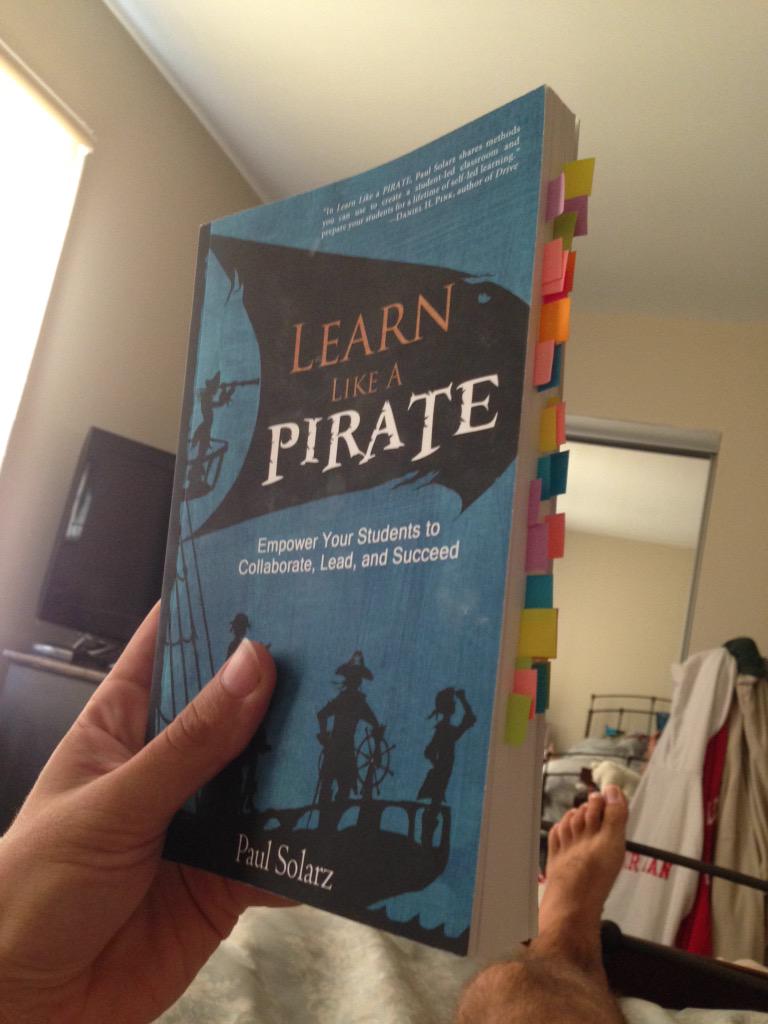
  1. Student-led learning - Last year, my primary goal was to develop a student-led classroom, based on Learn Like a PIRATE by Paul Solarz. On the whole, it was a success, but I might have started too strong too fast. It did force the students to step up and take ownership of their learning at an accelerated rate, but more scaffolding may have been necessary. At the end of the year, I worked more purposely with groups and students worked independently with each other. I want to refine this so we hit the group running and keep up with it. I have a very different population of students this year and I already know they will do a fantastic job with it.
  2. 20Time - As I shared in a prior post, I have been constantly tweaking and adjusting Genius Hour in my classroom. This year, I want to do a major pivot. I want to have the students focus on one problem and develop a solution. I have completed reading The 20Time Project by Kevin Brookhouser and want to scale his ideas to elementary. To be perfectly honest, I am not sure exactly what this will look like. My schedule has larger chunks of time in it that will allow for uninterrupted time, but I do not know when it will be. Will it be a set day or will it be fluid? I want to start with the Bad Idea Factory and then move into brainstorming from there. I want to empower my students to be change agents from an early age.
  3. Instruction/Assessment Practices - I want to explore more purposeful usage of flipped classroom. Last year, I flipped my classroom for math and saw dramatic gains in students’ academic growth. (Side note - I really need to write a reflection post on my flipped classroom experiences.) I want to continue this, but it may look different. Some students may do the in class flip depending on their access and home, but I want to use the information I gather from observing flipping in a more intentional way. In general, I want to use small groups in both reading and math more purposefully. After three years of doing small group, I am finally coming to terms that I don’t need to meet with every differentiated group the same amount of time. I can meet with some groups more than others; as long as I am meeting each student’s individual needs. To further this, I want to refine my assessment practices. I am currently reading The Truth About Testing by James Popham and it has an interesting idea on pre/post testing. I am still trying to wrap my head around it, but I think it will allow me to be more purposeful in my instruction and quantifying growth.
  4. Growth Mindset - Although this has a tendency to be a buzzword when not used correctly, I am still including it as a goal. Our staff read Mindset by Carol Dweck this summer. My principal says that “it’s not a theme; it’s a practice.” I dabbled into growth mindset last year after taking an online course through Stanford and witnessed incredible things from my students. That was only for half the year and I was amazed. This year, I am starting with growth mindset on Day 1 and will continue all year. We’ll make an anchor chart and reinforce it, but I know it will make a difference.
  5. Vlogging - This goal is more for me than within the classroom walls. I did some vlogging during my Google Innovator experience and enjoyed it. This year, I want to vlog weekly as a powerful reflection tool. I’m not entirely sure what it will look like, but my general idea is a one video per week. This would include video snippets from the day, daily reflections, and other thoughts. These would all be strung together and posted on YouTube. I started a site (vlog.justinbirckbichler.com) to post all of these, but as I said, I’m not sure what it’ll look like or anything else. It’ll be brand new and I am looking forward to it.


As you may have noticed, I am not looking to redefine or implement a lot of new things this year. I think you can be good at many things or great at a few things. If I had to choose one word to define this next year, it would be REFINE. I want to refine my teaching and provide the best for my students. As the year goes on, I’m sure I’ll discover new ideas and I’ll add those in, but these five goals will be my guiding light for the year. I’m looking forward to a brand new fresh start and cannot wait to see what my students achieve this year.

Monday, December 28, 2015

Successes, Challenges, and Resolutions

As 2015 draws to a close, I find myself reflecting on our first semester. I ask myself three questions:

1. What went well?

Merry Christmas from Room 22!
I made some major changes to my classroom this year - most notable being developing a student-led classroom and flipping the classroom for math. Both have been successful for the most part. It is definitely a huge shift in paradigm for the students but they have adapted well.

On the student-led side of things, they pretty much run the classroom. I give them their directions for activities and then they take off from there, leading themselves and each other. We have had discussions and role plays of how to help others make good choices in team work. The students announce and manage transitions and inspect the room for cleanliness and such. Around Thanksgiving, students began leading morning meeting. I post my lesson plans online and they are familiar with the format of morning meeting, so it seemed like a logical progression. It has gone pretty well so far. Another part of the student-led classroom was student-led conferences, which you can read more about here. It is hard to let go of control in the classroom, but it helps to empower the students and teach them how to self-manage. 

Flipping the classroom has also been a great new endeavor. I wrote a piece on how I flip the classroom for Participate Learning, and I will write a longer post dedicated to my reflections on flipping the classroom in early 2016. Overall, parent and student reception has been very positive to it. I can target instruction better based on gauging their understanding from the prior night's video and help challenge or remediate students accordingly. Students actually create videos for each other, so that is another cool part I like about flipping the classroom because I can assess how well they know the material by their ability to teach others.

BreakoutEDU success!
In addition to these two major changes, I have also integrated a lot of new ideas into the classroom, including coding, Google Cardboard, BreakoutEDU, a larger focus on STEM, and other activities. While these don't always fit perfectly into the curriculum, these are the activities the students look forward to and help teach good skills for life.

I have also taken great efforts to maintain a positive mindset, with the #FlyHighFri movement and the Friday Five calls. While not every day is perfectly positive, I have seen a big difference in my attitude this year. 

Finally, my class is fantastic this year. I have been fortunate to have had two pretty great classes the past two years, and this class continues the pattern. They have impressed me with how well they have adapted to each other and the various changes from previous years. As with any class, there are some students who may be more challenging, but I have seen growth in all of them. They truly have lived up to our mantra: "We don't make excuses, we make changes."

2. What challenges did I face?

Coding during the Hour of Code
Despite all the awesomeness going on in Room 22, I have encountered some challenges too. One of them revolves around testing. As I said in the Halloween Rest Stop of EduRoadTrip, most my feelings on testing are not the most positive ones. I think students are overtested, but that could be a separate post by itself. I did find one good moment from testing recently, which I shared on the Christmas episode of EduRoadTrip (check it out around the 6 minute mark.) I've tried to make testing more kid-friendly this year, but allowing the students to choose when to take their tests. (Side note here: we call tests "opportunities" because they are opportunities to show me what they can do. It seems to relieve stress for the students) The first quarter, I said, "All of these need to be done by the end of the quarter, but you can choose when." The majority of the students waited until the last day of the quarter. The second quarter, I gave two week windows, but many would still wait until the end of the windows. It is not a perfect system and still needs tweaking, but I like the idea of putting them in control. 

Along with this, I am struggling with time management this year. I moved over the summer, so I now have a 35 minute commute each way. This isn't terrible, but I've never had to commute more than five minutes in my life to any job. I essentially lose over an hour every day to driving, (although I do enjoy the drives because I listen to podcasts and audiobooks.) However, between time being taken for meetings and other events, I have a hard time keeping up with grading. I used to be really good at turning around grades in a day or two, but now sometimes it takes me a week or more. I use my nights and weekends to develop engaging lesson plans, but the grading time seems to have been slid to the back burner. I am human and I recognize that I need to develop a better system.  

Using Google Cardboard
The final challenge is more internal. I struggle with some of the national, state, and local mandates because I don't see the direct benefit to the students. Often times, I feel conflicted; do I do what I am told or do I do what I think is right for the students? I don't have an answer, nor do I think I will have an answer for a long time. I do spend a lot of time thinking about this, and in nearly all cases I will side with the students.

3. What are my resolutions for 2016?

I have consistently made resolutions for the past 15 or so years, but have a hard time following them. Hopefully by writing them down, whoever is reading this will hold me accountable.
Presenting at VSTE15
  • I will continue to hold my students to high expectations: Sometimes, it is easier to say "good enough." Our second class motto is "Good enough is never good enough." I will continue to push all students to grow, both socially and academically. 
  • I will develop better systems for testing/grading and time management: These are two struggles I identified and they need to be improved. Using before/after school times and planning periods more efficiently will help me with this. I also want to eventually shift to standards based grading and giving feedback versus grades, but that is a long term goal.
  • I will continue to develop professionally and look for new opportunities: This year, I co-founded the EduRoadTrip podcast and the #FlyHighFri positivity movement. I want to continue to create new things (including a major idea for another collaboration with Mari Venturino, but you'll have to wait and hear about that one) and continue to find the best fit for my philosophies and mindsets. I'll continue participating in Twitter chats and conferences to advance my knowledge base. One goal for 2016 Twitter is to have more real conversations on Twitter versus echoing all the fluff. I already have some professional development lined up in January- attending a Residential Weekend at Mt. Vernon and presenting at a #gafesummit!
  • I will take more time for my personal life: This seems like a direct contrast to my previous resolution, but it's possibly the most important. Between school/commuting, EduRoadTrip, #FlyHighFri, Twitter, blogging, and other educational related things, I have been missing out on spending time with my girlfriend, cat, friends, and family. I will intentionally set aside time to strengthen these connections, because without those four, the rest does not matter. I also need to get back into a workout routine and take more time to relax. This also ties into better time management. Nothing will necessarily be eliminated, but more streamlined efficiency is necessary.  
These are my thoughts from 2015. I am looking forward new adventures in 2016 and can't wait to see what it holds. I laid out my successes, challenges, and resolutions for the world to see; hold me accountable.

What are your reflections from 2015? What do you hope to achieve in 2016?

Monday, August 17, 2015

It's the Start of Something New

"What is the most important thing one learns in school? 
Self-esteem, support, and friendship." 
- Terry Tempest Williams

My new classroom set up
Originally, I was searching for an opening quote for this blogpost related to new starts and fresh beginnings. However, I happened upon this quote and decided it worked perfectly. This shall be my mantra for this year. I will not be focusing on the tests. I will not be focusing on data. I will be focusing on creating lifelong learners and strong relationships with my students.

Today was the first day of school. While I am exhausted, I am inspired and exhilarated. I read many wonderful books this summer, including Learn Like A Pirate, Teach Like a Pirate, He's the Weird Teacher, and Move Your Bus. I'm going to dedicate an entire post to the lessons learned from these four books in the future, but they made me look at my classroom differently*.

Inspiration from Learn Like a Pirate
First and foremost, I hit the ground running. I sent out a welcome video and information to parents a week before school started. The video introduced me (and my cat and superhero obsessions) and gave some insight into the coming year. I also called all of my students and spoke to them or left voicemail. This laid the groundwork for building strong relationships.

I also rearranged my classroom. I threw out all desks (including my own) and replaced them all with tables. This opened up and created a new look for my room. Time will tell how this works out.

Other changes include the environment and instruction. On the environment side of thing, I am going to give more responsibility to the students. This is largely due in part to the lessons in Learn Like a Pirate. We will also be flipping math class. Today, we discussed the concept of flipping, why we're doing it ("we can learn at home and work in school" - their summary,) and practiced taking notes from a video I recorded. I am excited for this new endeavor and will wrote a more extensive post later on this*. In addition to this, I just raised enough funds on DonorsChoose to get 12 more Chromebooks for my classroom. I am looking forward to being almost fully 1:1 and the possibilities it brings!

So there is a lot that is changing in my room, but a lot will stay the same. Relationships first has always been my goal. I focus on growth, both academic and individual. My standardized test scores may not be outstanding (nor are they terrible) but that doesn't matter to me. I will continually strive to make sure all 24 of my new students feel that they are a valued and critical part of this classroom. I said to them that we would become a family, and I intend to keep true to my word. 

*After proofing this post, I realized I alluded to
numerous future posts. Sorry! 
I will also continue to support the families of my students. I recently completed my Masters of Science in Curriculum and Instruction, and my research was all based on parental involvement. I investigated a first-hand look into the parent perspective of involvement. I am not a parent of humans (only a cat) and this helped me to understand their needs. I will use this to help meet their needs, through my continued HSCNs and providing the Flipped Videos. I also revamped my classroom website to maximize its efficiency and "user-friendly-ness" and created a Facebook (first time since 2011) to help meet the parents where they currently are. This support for parent will begin right away, with me holding a "Back-to-School Night" all about what to expect in fourth grade on Thursday. 

Positivity is my goal for this year. I want to make sure my students, the parents, my co-workers, and I am happy. Fly High Fridays are something I'll write about more later*, but essentially they are meetings to celebrate successes in our school. I'll be doing the Friday Five where I call five parents to share something great their child did. Too much of education is about data and tests and negativity and fixing run-on sentences (maybe I need a refresher.) 

I want this year to be different; hold me to it. 

What are your goals for the year? How will you celebrate success and build relationships?

Thursday, June 18, 2015

Year 2 Reflection: Looking Back to Move Forward

“We do not learn from experience... we learn from reflecting on experience.” 
- John Dewey

My start of school picture
I'm breaking custom with this post today. The focal point of this blog will not be about my students or about different classroom activities; it will be about the journey I have undergone this year. I have experience a number of changes this year: in instruction, in atmosphere, and in my connectedness. 

First and foremost, I would like to dispel the rumor that teachers have to plan once and reteach the same lesson year after year. After this year, I can concretely tell you that this is false. Yes, I reused some materials and lesson from last year, but by and large, I redeveloped my entire instructional delivery. Last year, I taught predominantly in whole group. I tried some small group, but got overwhelmed and stopped. I knew whole group wasn't the most effective way to teach, and I wasn't happy with that I had made an excuse. 

I decided over the summer to make some changes. I developed schedules, rotations, and activities to make it work more efficiently than my attempt last year. With procedures in place, it worked wonderfully! The students loved it and so did I. I taught reading and math entirely in small group format. It allowed me to target each groups' needs rather than "teaching to the middle." I plan to continue this next year, and to add some class flipping into the small group rotations, especially for science and history.

Math in small groups
Technology has always been my passion and I brought some technology into the classroom in my first year. However, I made it another goal to bring more purposeful tech integration to my classroom. This was another success. We used GAFE, green screens, Plickers, and many other technology components in useful ways. I would venture to say my students are among the most equipped in the school for working with technology in the entire building.

The school environment also underwent a huge change. Some were positive, such as gaining a new fourth grade team member who meshed incredibly well with my closest colleague and me. On the other hand, everyone, myself included, just seemed "off" and agitated all year. We did not do so hot on our state assessments last year and were in danger of losing accreditation. The stress about the risk of losing accreditation was palpable. I will be honest that I stressed about it for a few months, until I realized it was one test on one day. I was not going to let it rule my life. I wanted to provide a world of wonder and learning for my students. From that point, I always led with "is this best for the students?" This had a large amount of positive effect on the students, because all students made considerable growth from third grade.

Technology integration
I also took on more responsibilities this year than last; probably more than was wise to do. The HSCN experience was a large time commitment, but one that I feel was crucial. In addition to all of the responsibilities related to my full-time teaching job, I am enrolled in graduate school full time, was a cross country coach part time, and served on an autism services improvement team and a Google Educator consortium. This effectively meant I had little to no time to recharge during the week and had to leave my classroom every few weeks for meetings. It certainly wasn't easy keeping up with everything, but it was definitely worth it. It did come at a personal cost of being more highly stressed, but in the end it benefitted the students.

Probably the change that restored my sanity was becoming a connected educator. I had blogged on this at length earlier this year, but I continue to learn new things from my Twitter/Voxer PLN every day. These include wonderful members such as Rosy Burke, Mari Venturino, Greg Bagby, Stacey Lindes, Connie Hamilton, Mark French, Mark Bartmas, Richard Hattal, Kayla Delzer, and many other outstanding educators who I connect with on a daily basis. Becoming a connected educator has led me to many different viewpoints. Rather than having a handful of colleagues at my school, I literally have over 1,000 people I can reach out to at the touch of a button. I hope that my Tweets, Voxes, and blog posts help to inspire others as much as I have been inspired by them.

This has also led to different opportunities that wouldn't have otherwise been possible. Connie Hamilton nominated me for a Bammy Award for Elementary Teacher of the Year and I was featured on a few different websites, shows, and podcasts: Dr. Geniene Delahunty's Human Beacon, TeachCow Teacher Talk LiveSung Lee's Inspiring Educator Podcast, among others. This is not meant as a bragging moment for me; it just shows how reaching out can get your message out to the masses. Hopefully, by what has been said and written about me, I can help other teachers reach the maximum level of effectiveness. 

So what's next for Mr. B? This upcoming year, I decided to step down from cross-country coaching so I
My 2014-2015 class
can focus on my classroom more. My graduate degree should be completed by September. I will continue to grow as a teacher and a learner. One goal I have is to help others more effectively integrate technology into their classroom. I applied for a job as a technology coach, but was denied an interview. This will not deter me. I plan to set up "Technology Tuesdays," (an idea I got from Chris Nesi's podcast) where teachers would be invited to join me in my classroom for 15 minutes in order to learn a "tech tip they can learn today and use tomorrow." I think this will be a great way to slowly introduce tech to teachers. I'll continue offering more traditionally technology professional development as well, which will serve as the focus for another blog later this summer.

I will also be starting the EduRoadTrip podcast this summer with two members of my PLN. This podcast will be a great way to celebrate education in a fun and engaging way. Social media will continue to play a key role in my growth, and I aim to use Twitter and Voxer in the classroom more.

Next year will bring many changes personally and professionally. I hope to continue to instill a love of learning in my students and begin flipping the classroom. As an end-of-year activity, I polled my students about how they felt about this year. You can view the full responses here, and I'd to close with one of their thoughts: 

"[Mr. B] was fun about our learning and didn't just put worksheets in our face he took his time out of his free time to make fun things for use. He mixes math with VA Studies. He makes us laugh."

How was your 2014-15? What were some of your successes? What are some goals for next year?