Showing posts with label Social Media. Show all posts

Sunday, December 31, 2017

I Stepped Back

Around this time of year, EduTwitter is flooded with end of year reflections, goal setting for the next year, and #OneWord blog posts. I even did one in 2015. I contemplated writing one for this year and went back and forth on it for a few weeks. As I sit here on New Year's Eve day, I suppose this serves as an end of year reflection post.

Students working together to create a new flip video
To be quite honest, I have not done anything "new" in my classroom this year. Many of my mainstays have remained constant, but analyzed to a higher degree and implemented better. Most notably, my ability to do flexible grouping in small group instruction has improved. I regularly switch up my math groups as we enter into new units, based on informal pretests. Right before we let out for winter break, I assessed all students' reading progress through Fountas and Pinnell and will make some changes to groups as we begin 2018. I've been fine tuning my flipped classroom videos instead of just recycling old ones, in addition to having students create videos for their classmates, which was something I never got around to last year.

Technology integration continues to be a focal point of my classroom, but with one major change: I am no longer 1:1 Chromebooks. I have to share a Windows laptop cart with another teacher. At first, I hated it, but now I am learning to embrace it, though I do still hate how slow the laptops are. It forces me to be more intentional in how I am using the technology, which is always a good thing.

I've used Breakout Edu boxes and digital games, a handful of HyperDocs, and other things I love using while teaching. I continue to connect with my students on a regular basis and truly love my class and all their unique qualities. The families are very supportive this year and engage through Remind frequently. Within the walls of my classroom, things are par the course, which is totally ok with me.

A major change has occurred outside the school building in my life. If you're a regular reader of Mr. B's Blog, you may have been disappointed to see that there was only one post published this school year. Technically speaking, that wasn't even a new post; it was a holdover that I just published late. Besides not blogging about education, I've also stopped tweeting about education. In November 2017, I opened a new Twitter account for educational tweets, but really don't use that one anymore.

However, I haven't stopped writing entirely - I just write about a different subject matter now, namely men's health and testicular cancer awareness. As you probably know, I was diagnosed with cancer about a year ago, underwent chemotherapy for three months, and was cleared in remission in March 2017. I've been sharing my journey at my testicular cancer awareness blog, A Ballsy Sense of Tumor. My original Twitter account was retooled to focus on testicular cancer awareness. As always, I highly encourage you to check out both the website and the Twitter.

Is this to say I am not passionate about education anymore? No. I certainly still have very strong feelings about education and what needs to improve about it, but I'm focusing my energy on what I can do in my own classroom with my own students in my school. Those kids deserve my 100% effort while I'm there and I will give them my best. Furthermore, I needed better balance in my life. Education was my day job and my night hobby. EduTwitter was turning into an echo chamber, with platitudes and more of the same, and losing its luster with me. I needed to make a change.

There are literally hundreds of thousands, if not millions, of teachers who are tweeting and blogging about education. I don't feel like the community needs another voice, least of all mine. This isn't a vie for headpats or attention. I know I have some cool ideas, but writing about it and endlessly promoting it isn't necessarily how I wanted to spend my time anymore.

While there are countless educational blogs, there is a huge lack of testicular cancer awareness sites. In writing about my experiences and raising awareness, I've found a passion that does not relate to my profession (although I do have a project in the works that blends the two, so stay tuned) and I feel it has improved me as a person to have separate interests. It makes me a more well-rounded person and a real individual.

If education is your job and also your hobby, I'm not disparaging you. If it works for you, that's awesome. This is what works for me. I'm also not saying that I won't be writing or tweeting about education ever again. I still have over half a school year to go, and some ideas are swirling around that I want to try out, and may write about when the mood strikes.

So this is probably a different kind of end of year post than the norm that is being shared on Twitter today, and I am well aware of the irony that I'm writing a post about not wanting to blog about education and then tweeting it out. For now (and the foreseeable future), I've made the decision to spend my non-working hours working on my own passion project and dedicating my time and energy into doing a different form of good.

When it comes to educational blogging and social media,

I stepped back.

Wednesday, September 7, 2016

Teachers Don't Have All The Answers

With a Breakout EDU game using the box, setup instructions are provided. It gives the lock combinations, printable materials, and the paths the students follow to solve the riddles. You need these in order to facilitate the game. With the Breakout EDU Digital games, none of this is provided - everything is ready to go as soon as you enter the game.


Multiple times a week, we receive emails, tweets, Facebook messages, and other assorted communication from teachers asking for an answer key to the Digital games. When we receive these messages, we provide additional prompts and hints, but refuse to provide answer keys.


Why do we do this? Is it because we are evil and want you to suffer? Absolutely not - this is our contribution to the Breakout EDU mantra. For the bulk of the history of education, teachers have been viewed as the keepers of knowledge or the sage on the stage. In our opinion, this has gone on far too long. With the advent of the digital age, students have access to limitless amounts of information. Our roles as teachers need to change.


The “hidden curriculum” of soft skills is just as critical as the content we are mandated to teach. Words like rigor, growth mindset, resilience, and productive struggle thrown around as skills that students need to be successful in life, yet how often do we model this for our students? By not having access to an answer key, you are provided with a perfect opportunity to experience what a student feels when they first encounter a tough trigonometry problem. You're faced with a choice - put in effort to stretch your abilities to their fullest extent and grow your brain or email us for an answer (which is akin to flipping to the back of the textbook for the key.) Which would you prefer your students to do? Why do we not hold ourselves to that same standard?


You don't have to struggle alone - share your plight with your students. Challenge them to help you complete the puzzles. Students see things differently than adults; something that has stumped us for hours takes a matter of seconds for them. Imagine their moment of glorious success. They solved something their teacher couldn't.


But it's deeper than that. You were vulnerable with them. You shared your struggle. You modeled resiliency and a refuse to give up. You showed them that it's ok to ask for help; that it's ok to admit you don't always have all the answers. This is a bond that can't be forged by playing a video about famous figure who overcame adversity to reach success. They'll be more likely to let down their guard and ask you for help - and you'll understand their feelings even better.


By now you're thinking that this is easy for us to say - we have all the answers to the games. However, we've played other's games and been through this productive struggle.


And it's not just us who feel this way. For every few requests for answers, there’s one praising this dedication to doing something differently. We'll close with our favorite, which comes from Dr. Donovan DeBoer, superintendent of Parker School District in South Dakota:


One of my “mantras” has always been:  “The one that does the doing, does the learning.”  So when I was ever so close to our first teacher in-service days, and [Breakout EDU Digital] was one of the items I wanted to show my staff, I was very torn when I sent that dreaded, “I need help email.”  However, in true educator fashion, [Justin and Mari] did not oblige my begging of “cheats” to complete the task.  Instead, I was sent a very subtle hint and encouragement to complete the task.  

It was a great lesson for me as a leader of young people, and adults. It helped solidify my belief that if you want to learn, you have to do. 
Dr. DeBoer's faculty and students

It also proved to me how important collaboration is for our students.  I needed help, I didn’t necessarily want the answers, but I needed another brain (or 32). As I introduced the activity to my staff, I was short one lock code.  In the essence of time, we worked in groups on the digital breakout “Stranded on the Island.”  As time passed I witnessed adults, veteran teachers, cheer with excitement when they found a new clue, or figured out a code, and hide their answers to allow for others to feel the same thing when they found things on their own.   

Few more hours went by, in-service over, but I was still plugging away. I had to complete this thing.  That’s when the magic happened - one of my football coaches sent me a text. He had solicited a friend from hours away, that started working on it as well, and we finally cracked the mystery lock.   

The power of collaboration is real.  Shared suffering in the task, and then the jubilation we share in the accomplishment.  Two heads are better than one, and three better than two. Students need that time together, to share, to bounce ideas off one another, to enjoy the struggle together.   

More importantly, we have to have the patience to let learners learn.  They need to make mistakes, they need to learn from them, they need to talk it out with other people to learn the other side of communication not talked about “listening” to one another.  Then the “magic,” can happen.

Thursday, June 16, 2016

Year 3 In Review

"Follow effective action with quiet reflection. From the quiet reflection will come even more effective action." 
-Peter Drucker


I have been out of school for about two weeks now, and have been dragging my feet on writing this post. I have been reflecting on what I wanted to say, how I wanted to say it, and how to best format my thoughts. I decided to structure it similarly to my end of 2015 blog post - sharing successes, challenges, updating on my resolutions, and sharing new goals for next year.


1. What went well?

First and foremost, my students greatly surpassed my academic expectations for them. Each student showed at least a years worth of growth in reading, and much more in math. I am not one to harp on data, but in comparing their end of year tests in third grade versus fourth grade, I saw drastic improvement in nearly all students.

Reciprocal teaching in math
Furthermore, my students showed a greater maturity and developed strong growth mindsets. While growth mindset seems to be one of the latest education buzzwords, I saw my students achieve and excel while demonstrating growth mindset principles. One of my students struggled severely in math in the beginning of the year. He couldn't seem to grasp the concept of regrouping/borrowing/exchanging/whatever the correct term is in subtraction. I worked with him with physical manipulatives, with numbers, computer programs, peer tutoring, and everything else imaginable, but what made the difference was him. He recognized a weakness, wanted to get better, worked at it, and ended up teaching other students how to do it. Another time, my students were working on a Breakout EDU box and one kid stopped the whole class to remind everyone to use their growth mindsets and not give up. I had it on Periscope, but Katch decided to shut down so I can't link the video here. 

We spent a lot of time in class developing the soft skills and other skills needed for life. We had three parables I constantly came back to: "Making Changes, Building a Bridge, and Digging a Hole." I'll explore these parables more in my next post, but they had a definitive impact on my students.

Controlled chaos on a STEAM challenge
I tried a whole lot of new things in class, including student led learning, flipped classroom, Breakout EDU, coding, higher integration of STEAM/Makerspaces, HyperDocs (introduced to me by the wonderful Karly Moura,) and 1:1 Chromebooks. All of these were successful (to varying degrees) and I will use elements of each in my next school year.

2. What challenges did I face?

While student led learning was my main goal for the year, I think I went at it too hard too fast. Hindsight being 20:20, I should have scaffolded it more. I added more scaffolding around the midpoint of the school year, and next year I need to start with more scaffolding and then pull back. I do not think my students suffered from this though. It forced them to learn new skills (that they need) at a rapid pace. Sometimes, you've got to run before you can walk.

A reluctant reader reads Kid President at Morning Meeting
My timing/pacing was off this year. We started earlier than ever before, and our semester break was before Christmas and our end of year tests were in early May, as compared to last year when the semester ended in January and our end of year tests were in early June. It was definitely a transition, and I will need to be cognizant of that in the future. I was still able to teach all of the material, but I felt rushed at times and did not get much time at the end of the school year to do some of the activities that I've done in the past (like Reader's Cafe.)

All in all, the year was different and challenging at times, but I feel it was extremely successful. 

3. Updates on resolutions

I had developed four resolutions for 2016 and this section will serve to update progress on them. 

The proposal
  • I will continue to hold my students to high expectations: I would say this has been achieved and will continue to be a focal point of my teaching. Students need to know they are going to be held to high standards and they will meet them.
  • I will develop better systems for testing/grading and time management: I developed better systems for testing and grading. When a student finished their test, they brought it up to be and I graded on the spot. I gave them a second chance or gave some brief remediation. This system seemed to work better for the students and for me. It also allowed me to follow up with more focused remediation later. My time management has gotten better, but I still need to work to carve out chunks of time to work and time to relax. 
  • I will continue to develop professionally and look for new opportunities: I have left my position in Warren County and will be starting as a fourth grade teacher in Stafford County for the next year. I am extremely excited for this new opportunity and can't wait to see what it brings. Additionally, I co-created Breakout EDU Digital with Mari Venturino in March and that has been a wonderful opportunity. Attending the Google for Education Innovator Academy in late February left me with many takeaways (check them out here and here.)
  • I will take more time for my personal life: I realized this was the biggest goal I needed to work on. In February, I proposed to my girlfriend, and now she is my fiance. We are buying a house closer to my new school this summer and I have enjoyed taking more time to spend with her and create more memories. When Mark French came to visit me in March, he shared that sometimes you've got to unplug and make a commitment to spend time. With this, I learned how to say no to other things and have had to cut things out of my "online life" to make room for enjoying what is real.
4. So what's next?

While I will miss my old fourth grade team, other colleagues, and seeing my old students, I am extremely excited for my new career adventure. I have met with my new team and they seem incredibly supportive and easy going (plus, there is another guy on the team!) This new school should be a great fit for me.

I want to get into standards-based grading (which my new team does a version of) and a more integrated/cross curricular teaching method. I think this is the best way to truly assess the students' understanding and maximize instructional time. I want to still continue doing elements of the above things from the successes paragraph, with more scaffolding in student led and revamping some elements of flipped classroom. 

Room 22 Family 2015-2016
Above all things, I want to refocus. Over the past year since I joined Twitter, I have been dabbling into many things and doing a good job with them. I don't want to do a good job of many things, I want to do a great job of a few things. I will be focusing on teaching, my personal life, EduRoadTrip, Breakout EDU Digital, and #FlyHighFri. (After some thoughts, I have lessened my involvement with various Twitter chats and completely dropped #Teach20s.) Sharing these responsibilities with the awesome team of Mari and Greg Bagby will also help in the time commitments. I would also like to continue to carve out time for reading (both personal and professional) and writing. 

Last year, I closed this blog entry with a snippet from a student's end-of-year survey, and I feel this is a good way to end it again:

"It was the best year of my life. I made new friends and I had some drama. Mr.B is the best teacher ever and I learned a lot from him. Also if you focus you have know Idea what you can do. When you make class fun, students learn more and are much more happy to go to school."

Saturday, January 2, 2016

#Teach20s


Author's Note: This project ceased to exist in April 2016. If anyone wants to adapt it as their own, be my guest. I still feel there is a need for it.

In our respective 2015 reflection blog posts (Justin’s here and Mari’s here,) we noted that part of our resolutions was to continue to grow and look for new opportunities, and specifically mentioned a Top Secret Plan between the two of us.


Consider this Phase 1 of the Top Secret Plan.


#Teach20s is a new slowchat for teachers in their twenties. We will focus on the balance between growing into an adult, while thriving as a new teacher. Let’s face it, becoming an effective adult is just as daunting of a task as becoming a master teacher. Let’s build a community of openness, honesty, and collaboration to all help each other grow.


Not in your twenties anymore? That’s perfectly fine too! #Teach20s members can benefit from advice on how you navigated through this time in your life. Teachers in their twenties need a solid mentor who will help them not only grow as a teacher, but also as a person.


In our 2015 reflection posts, we also mentioned that we want to dedicate more time to our personal lives and improve our instructional practice. Starting a new Twitter chat seems like a direct contrast to this. We beg to differ. We are constructing a place where we can grow personally and professionally, and we are surrounding ourselves with individuals who will help us improve our instructional practice.


Because we know how important time is to everyone, we are offering this as a slow chat. On Sunday morning, we will post the question (with the #teach20s hashtag) through our Twitter accounts (@Mr_B_Teacher and @MsVenturino) and the new @Teach_20s account. It will be a graphic and will be reposted a few times throughout the week. Whenever you get a chance, respond with the #Teach20s hashtag. We encourage you to respond to others and engage in meaningful conversation, as that will help us all to grow. Remember to set up a column for #teach20s in Tweetdeck to help track the chat easier.


Establishing a new identity as an adult and navigating a new career of teaching can be a daunting experience. Let’s not do it alone; let’s help each other. If you have any suggestions or ideas for topics, feel free to leave a comment below.


Author’s note: This post is cross posted on Mari Venturino’s blog too.

Monday, December 28, 2015

Successes, Challenges, and Resolutions

As 2015 draws to a close, I find myself reflecting on our first semester. I ask myself three questions:

1. What went well?

Merry Christmas from Room 22!
I made some major changes to my classroom this year - most notable being developing a student-led classroom and flipping the classroom for math. Both have been successful for the most part. It is definitely a huge shift in paradigm for the students but they have adapted well.

On the student-led side of things, they pretty much run the classroom. I give them their directions for activities and then they take off from there, leading themselves and each other. We have had discussions and role plays of how to help others make good choices in team work. The students announce and manage transitions and inspect the room for cleanliness and such. Around Thanksgiving, students began leading morning meeting. I post my lesson plans online and they are familiar with the format of morning meeting, so it seemed like a logical progression. It has gone pretty well so far. Another part of the student-led classroom was student-led conferences, which you can read more about here. It is hard to let go of control in the classroom, but it helps to empower the students and teach them how to self-manage. 

Flipping the classroom has also been a great new endeavor. I wrote a piece on how I flip the classroom for Participate Learning, and I will write a longer post dedicated to my reflections on flipping the classroom in early 2016. Overall, parent and student reception has been very positive to it. I can target instruction better based on gauging their understanding from the prior night's video and help challenge or remediate students accordingly. Students actually create videos for each other, so that is another cool part I like about flipping the classroom because I can assess how well they know the material by their ability to teach others.

BreakoutEDU success!
In addition to these two major changes, I have also integrated a lot of new ideas into the classroom, including coding, Google Cardboard, BreakoutEDU, a larger focus on STEM, and other activities. While these don't always fit perfectly into the curriculum, these are the activities the students look forward to and help teach good skills for life.

I have also taken great efforts to maintain a positive mindset, with the #FlyHighFri movement and the Friday Five calls. While not every day is perfectly positive, I have seen a big difference in my attitude this year. 

Finally, my class is fantastic this year. I have been fortunate to have had two pretty great classes the past two years, and this class continues the pattern. They have impressed me with how well they have adapted to each other and the various changes from previous years. As with any class, there are some students who may be more challenging, but I have seen growth in all of them. They truly have lived up to our mantra: "We don't make excuses, we make changes."

2. What challenges did I face?

Coding during the Hour of Code
Despite all the awesomeness going on in Room 22, I have encountered some challenges too. One of them revolves around testing. As I said in the Halloween Rest Stop of EduRoadTrip, most my feelings on testing are not the most positive ones. I think students are overtested, but that could be a separate post by itself. I did find one good moment from testing recently, which I shared on the Christmas episode of EduRoadTrip (check it out around the 6 minute mark.) I've tried to make testing more kid-friendly this year, but allowing the students to choose when to take their tests. (Side note here: we call tests "opportunities" because they are opportunities to show me what they can do. It seems to relieve stress for the students) The first quarter, I said, "All of these need to be done by the end of the quarter, but you can choose when." The majority of the students waited until the last day of the quarter. The second quarter, I gave two week windows, but many would still wait until the end of the windows. It is not a perfect system and still needs tweaking, but I like the idea of putting them in control. 

Along with this, I am struggling with time management this year. I moved over the summer, so I now have a 35 minute commute each way. This isn't terrible, but I've never had to commute more than five minutes in my life to any job. I essentially lose over an hour every day to driving, (although I do enjoy the drives because I listen to podcasts and audiobooks.) However, between time being taken for meetings and other events, I have a hard time keeping up with grading. I used to be really good at turning around grades in a day or two, but now sometimes it takes me a week or more. I use my nights and weekends to develop engaging lesson plans, but the grading time seems to have been slid to the back burner. I am human and I recognize that I need to develop a better system.  

Using Google Cardboard
The final challenge is more internal. I struggle with some of the national, state, and local mandates because I don't see the direct benefit to the students. Often times, I feel conflicted; do I do what I am told or do I do what I think is right for the students? I don't have an answer, nor do I think I will have an answer for a long time. I do spend a lot of time thinking about this, and in nearly all cases I will side with the students.

3. What are my resolutions for 2016?

I have consistently made resolutions for the past 15 or so years, but have a hard time following them. Hopefully by writing them down, whoever is reading this will hold me accountable.
Presenting at VSTE15
  • I will continue to hold my students to high expectations: Sometimes, it is easier to say "good enough." Our second class motto is "Good enough is never good enough." I will continue to push all students to grow, both socially and academically. 
  • I will develop better systems for testing/grading and time management: These are two struggles I identified and they need to be improved. Using before/after school times and planning periods more efficiently will help me with this. I also want to eventually shift to standards based grading and giving feedback versus grades, but that is a long term goal.
  • I will continue to develop professionally and look for new opportunities: This year, I co-founded the EduRoadTrip podcast and the #FlyHighFri positivity movement. I want to continue to create new things (including a major idea for another collaboration with Mari Venturino, but you'll have to wait and hear about that one) and continue to find the best fit for my philosophies and mindsets. I'll continue participating in Twitter chats and conferences to advance my knowledge base. One goal for 2016 Twitter is to have more real conversations on Twitter versus echoing all the fluff. I already have some professional development lined up in January- attending a Residential Weekend at Mt. Vernon and presenting at a #gafesummit!
  • I will take more time for my personal life: This seems like a direct contrast to my previous resolution, but it's possibly the most important. Between school/commuting, EduRoadTrip, #FlyHighFri, Twitter, blogging, and other educational related things, I have been missing out on spending time with my girlfriend, cat, friends, and family. I will intentionally set aside time to strengthen these connections, because without those four, the rest does not matter. I also need to get back into a workout routine and take more time to relax. This also ties into better time management. Nothing will necessarily be eliminated, but more streamlined efficiency is necessary.  
These are my thoughts from 2015. I am looking forward new adventures in 2016 and can't wait to see what it holds. I laid out my successes, challenges, and resolutions for the world to see; hold me accountable.

What are your reflections from 2015? What do you hope to achieve in 2016?

Sunday, September 20, 2015

You Must Read These Five Books That Will Totally Transform Your Classroom!

Over the summer, I was gifted four books for my birthday and I purchased one audio book in the beginning of the school year. You won't believe what happened next!

Author's note: This article is  a parody of a Buzzfeed-esque, clickbait article, but does contain real information on how these five books shaped my new year. 
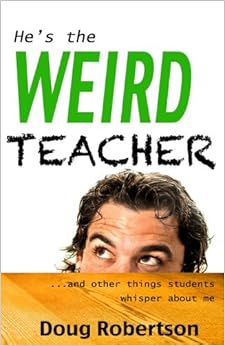
Image from Amazon
He's The Weird Teacher by Doug Robertson

I started He's The Weird Teacher about two hours after I received it and was done by the end of my sister's softball game. I had interacted with Doug numerous times on Twitter and was always intrigued by his insightful, yet inherently funny musings about education. The central idea in this book is that education should be weird (and fun) for students. Seeing as many students describe me this way, it was a match made in heaven. I loved this book for many reasons, but the main reason holds true for all of the following books: It is a book written by a teacher without an abundance of technical jargon and statistics. It is one man's true experiences in his classroom.

I took many ideas from this book and made them my own. At the close of his book, Doug mentions how he thanks his class and they thank him back. It was a small excerpt from the larger narrative, but it stuck with me. I always greet my students in the morning and discuss how their evening was and how their day will be, but never really said good bye. This year, I shake their hands as they leave and have the following exchange:

Mr. B: "Thank you for learning." Student: "Thank you for teaching."

It's a great way to end the day and helps to reinforce respect and manners in our classroom. Another idea I "borrowed" from his book is his ideas on kindergartners.  Basically, Doug says that kindergartners are his number one thing to terrorize. I inadvertently said something to this effect during a spelling test and the students now expect the tests to include the next chapter in my hunt of kindergartners. If you ever run into one of my students and they say that Mr. B's favorite food is teriyaki-glazed kindergartner, I will deny it. I'm really hoping I don't get the inevitable phone call about these statements. This book definitely has a lot of awesome things to say, and I am looking forward to reading his second one (complete with and autograph and personalized sonnet.) 

Doug, thank you for writing. Thank you for being weird. 
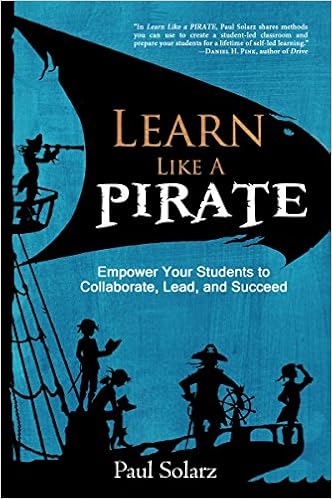
Image from Amazon
Learn Like a Pirate by Paul Solarz

While all books on this list had a profound impact on my life for this year, I would venture to say that Learn Like a Pirate had the biggest effect on my instructional practice and classroom environment. The focal point of this book is that students can and should run the classroom. They are able to do everything from various classroom tasks to leading their own learning to instructing others.

I am currently five weeks into trying this in my room and it is a world of change. I am seeing the students step up as leaders in the classroom and turning to each other to help. To remind the students to consult other students first, I wear a sign all day that says "Ask 3 Before Me." This serves as a visual reminder to seek out help from other students first. I still have a lot of interaction with my students, but it is my goal to get them to be self-sufficient. Students enjoy taking charge and helping others. It's definitely helped them mature faster and I'm glad I made the switch. I get to spend a lot more time watching students become problem solvers rather than me worrying finding solutions for them. It is a not a perfect system yet, but we are smoothing out wrinkles as they arise.

Paul is also an incredible guy. We have interacted numerous times on Twitter and I was lucky enough to have a conversation with him for the EduRoadTrip (I should also mention that Doug is a future guest. Dave, Ron, and Jessica, you are more than welcome too!) In our conversation, I learned even more about a student led classroom and became even more passionate. I asked him a question the other day about how to approach getting other adults on board, and he said to have the students take charge of redirecting. It was an interesting idea and it's still in progress.

Paul, thank you for writing. Thank you for inspiring a student-led room.
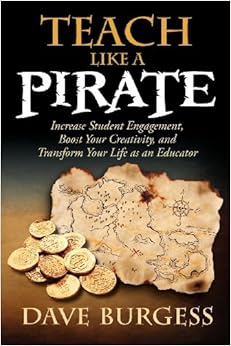
Image from Amazon
Teach Like a Pirate by Dave Burgess

#TLAP was one of the first Twitter chats I participated in back when I first joined up on Twitter in February. However, I didn't actually read Teach Like a Pirate until August. I was sent this and Learn Like a Pirate by Dave Burgess himself, under the request of my good friend Dr. Geniene Delahunty. I have an awesome PLN!

This book resonated with me for a number of reasons. First, it reinforced what I already believed: Education should be fun for the students and we shouldn't worry so much about the minutia of things beyond our control. Using the PIRATE acronym, teaching can be enjoyable and meaningful for everyone in the room: both the students and the teacher. Each letter is as important as the next and can transform any classroom.

I especially liked the hooks section. While Dave is a history teacher, they can be applied to any subject area. They are quick and easy ways to open a lesson or take it to the next level. While I like to think that my lessons are engaging, this made me think of more ideas. I often steer clear of arts-and-crafts type activities, but I got a lot of great ideas on how to incorporate them from those hook ideas.

Perhaps the part of the book that I took most to heart was the first days of school section. In past years, I did a very traditional "Here are the rules, here's who I am, here's what we are going to learn" type situation. The book challenged me to think about those first days differently. You only get one chance to make a first impression. Day one of his book involved building something out of Play-Dough and sharing it. I modified it to have them decorate their supply boxes and sharing. Day two in his book presented a desert survival scenario where his students had to choose which people to save. We did a similar concept, but with objects to save rather than people. At no point on the first two days of school did I launch into my rules and about me speech, and the students definitely benefited. I am hoping to soon pick up a copy of P is for Pirate, Dave's second book which is co-authored by his wife, Shelley

 Dave, thank you for writing. Thank you for teaching me to teach like a pirate.
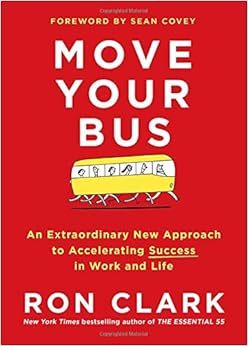
Image from Amazon
Move Your Bus by Ron Clark

Full disclosure, I am a giant Ron Clark fan. There are very few people in the world that I have followed to an almost religious level and Ron is certainly one of them. I have read all of his books, but Move Your Bus is my favorite. 

While his first three books provided a laundry list of awesome instructional and general teaching ideas, Move Your Bus acted as an inspirational read for me. My mission this is year is to funnel energy into positive change, and this book totally reinforced it. To relay the message of the book, there is a bus. On this bus are five groups of people: Drivers (who steer the bus,) Runners (who constantly work hard to improve all,) Joggers (lesser versions of Runners, but still moving in the right direction,) Walkers (not really contributing anything,) and Riders (who ruin the momentum for the rest.) 

After reading this, I honestly had to ponder what I am. I like to think that I am definitely not a Walker, Rider, or Driver. I would say I am a mix of a Runner and a Jogger. I always do want to do my best, but it's not always to improve everyone. As you read the book, think about what you might be.

One message I really enjoyed was that you shouldn't pour your energy into a Rider. Chances are, this energy would be wasted. I have seen this first hand and agreed. Some people just want to bring others down and there's no fixing that. However, it is important to note that this is only true for helping adults. We should never give up on students, regardless if they are Riders.

Ron, thank you for writing. Thank you for being a Runner who became a Driver (and still is a Runner.)  
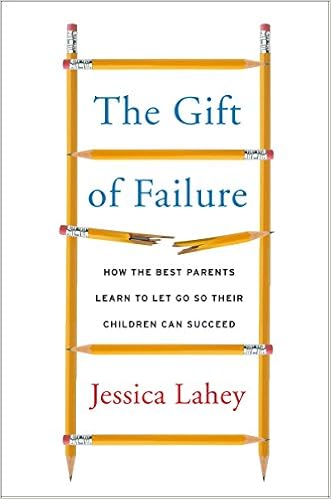
Image from Amazon
Gift of Failure by Jessica Lahey 

The final book on this list was the audiobook. I now have a longer commute and this helped to fill that time for a week. The Gift of Failure has many interesting points and works well as a companion piece to Learn Like a Pirate.

First things first. This point is written as a hybrid of a parenting and teaching book. While it seems posed more of a parenting book, I still got a lot out of it as a teacher. The overall theme is that we should not coddle students so much. I have seen this in my classroom and in my own personal life. Children are capable of great things, we need to let them show us.

Jessica advocates for leading students to success without doing it for them. Allow them to learn from their mistakes. The best way to effect change is a natural consequence. Children will understand the why so much better if they experience it for themselves.

My parents are incredible people. However, I think I would have benefited if they read the book when I was younger. For example, Jessica taught her children to do the laundry when they were in their early teens. I didn't learn until I was in college (and still struggle with it at 24. I don't understand why you have to separate the colors!) However, my parents did instill a lot of responsibility in me, such as managing my own life and teaching me to cook. Thanks Mom and Dad (not sure if they read my blog, but should cover myself to be safe!) 

This book is unique because it is not explicitly a teaching book. You will have to take the lessons and apply them to your own educational classroom. There is a lot of merit to this book for both parents and teachers.

Jessica, thank you for writing. Thank you for giving me the gift of failure. 

All of these books are great reads. Many are quick reads, and feature very few statistics and studies. Try them out for yourself. Let me know what you think in the comments below. 

Saturday, September 5, 2015

Fly High Friday

"Once you replace negative thoughts with positive ones, you'll start having positive results."
- Willie Nelson

Teaching is the definition of a labor of love. Low pay, over-emphasis on tests, long (and often unpaid) hours, and questionable district/state/federal mandates can drive many teachers to a place of negativity. However, we must make sure we are making profound efforts to rise above this.

As I mentioned in my previous post, I want this year to be different. I want it to be different for the students, but I also want it to be different for my colleagues and me. Last year, we were told we were in danger of losing accreditation. This took a large toll on all parties involved, and morale was way down. I would joke last year that I loved my job from 8-3, but hated it outside of those hours. There was certainly an element of truth to that, but I don't want to do that again this year.

Our class motto is "We don't make excuses, we make changes." We say it every morning to close our morning meeting. I would be a hypocrite if I didn't live it myself. In talking with my friend and EduRoadTrip podcast co-host, Mari Venturino, we developed the concept of Fly High Friday. 

What is Fly High Friday? The vision was to bring together the staffs of our schools to celebrate success and positivity from our week. This would be an optional event so it wasn't forced and fake. I partnered with my school counselor on it and we sent out the email inviting all to come. 

We decided to meet before school on a Friday for fifteen minutes. The first week went really well and I was happy we were off to a good start. Each week, we have had fluctuating amounts of people, but seem to have a strong core group. We have a website set up for those who can't make it to the morning session and have a TodaysMeet chat room set up so the conversation can last all day.  

It is very refreshing to start off my final day of the week on a positive note. I get to hear great things that other teachers are doing and can share my students' successes in my own room. Other teachers reflect the same feelings. It's amazing what a shift in mindset can do. 

You can join in the sharing too! On Fridays, tweet out your own positive messages about your week using #flyhighfri. I would encourage you to start a face-to-face meeting in your own school as well! Pick a day that works for you: Mindfulness Monday, Thinking Positive Thursday, or anything else you can think of. Let's end our weeks strong and on a high note!

Thursday, June 18, 2015

Year 2 Reflection: Looking Back to Move Forward

“We do not learn from experience... we learn from reflecting on experience.” 
- John Dewey

My start of school picture
I'm breaking custom with this post today. The focal point of this blog will not be about my students or about different classroom activities; it will be about the journey I have undergone this year. I have experience a number of changes this year: in instruction, in atmosphere, and in my connectedness. 

First and foremost, I would like to dispel the rumor that teachers have to plan once and reteach the same lesson year after year. After this year, I can concretely tell you that this is false. Yes, I reused some materials and lesson from last year, but by and large, I redeveloped my entire instructional delivery. Last year, I taught predominantly in whole group. I tried some small group, but got overwhelmed and stopped. I knew whole group wasn't the most effective way to teach, and I wasn't happy with that I had made an excuse. 

I decided over the summer to make some changes. I developed schedules, rotations, and activities to make it work more efficiently than my attempt last year. With procedures in place, it worked wonderfully! The students loved it and so did I. I taught reading and math entirely in small group format. It allowed me to target each groups' needs rather than "teaching to the middle." I plan to continue this next year, and to add some class flipping into the small group rotations, especially for science and history.

Math in small groups
Technology has always been my passion and I brought some technology into the classroom in my first year. However, I made it another goal to bring more purposeful tech integration to my classroom. This was another success. We used GAFE, green screens, Plickers, and many other technology components in useful ways. I would venture to say my students are among the most equipped in the school for working with technology in the entire building.

The school environment also underwent a huge change. Some were positive, such as gaining a new fourth grade team member who meshed incredibly well with my closest colleague and me. On the other hand, everyone, myself included, just seemed "off" and agitated all year. We did not do so hot on our state assessments last year and were in danger of losing accreditation. The stress about the risk of losing accreditation was palpable. I will be honest that I stressed about it for a few months, until I realized it was one test on one day. I was not going to let it rule my life. I wanted to provide a world of wonder and learning for my students. From that point, I always led with "is this best for the students?" This had a large amount of positive effect on the students, because all students made considerable growth from third grade.

Technology integration
I also took on more responsibilities this year than last; probably more than was wise to do. The HSCN experience was a large time commitment, but one that I feel was crucial. In addition to all of the responsibilities related to my full-time teaching job, I am enrolled in graduate school full time, was a cross country coach part time, and served on an autism services improvement team and a Google Educator consortium. This effectively meant I had little to no time to recharge during the week and had to leave my classroom every few weeks for meetings. It certainly wasn't easy keeping up with everything, but it was definitely worth it. It did come at a personal cost of being more highly stressed, but in the end it benefitted the students.

Probably the change that restored my sanity was becoming a connected educator. I had blogged on this at length earlier this year, but I continue to learn new things from my Twitter/Voxer PLN every day. These include wonderful members such as Rosy Burke, Mari Venturino, Greg Bagby, Stacey Lindes, Connie Hamilton, Mark French, Mark Bartmas, Richard Hattal, Kayla Delzer, and many other outstanding educators who I connect with on a daily basis. Becoming a connected educator has led me to many different viewpoints. Rather than having a handful of colleagues at my school, I literally have over 1,000 people I can reach out to at the touch of a button. I hope that my Tweets, Voxes, and blog posts help to inspire others as much as I have been inspired by them.

This has also led to different opportunities that wouldn't have otherwise been possible. Connie Hamilton nominated me for a Bammy Award for Elementary Teacher of the Year and I was featured on a few different websites, shows, and podcasts: Dr. Geniene Delahunty's Human Beacon, TeachCow Teacher Talk LiveSung Lee's Inspiring Educator Podcast, among others. This is not meant as a bragging moment for me; it just shows how reaching out can get your message out to the masses. Hopefully, by what has been said and written about me, I can help other teachers reach the maximum level of effectiveness. 

So what's next for Mr. B? This upcoming year, I decided to step down from cross-country coaching so I
My 2014-2015 class
can focus on my classroom more. My graduate degree should be completed by September. I will continue to grow as a teacher and a learner. One goal I have is to help others more effectively integrate technology into their classroom. I applied for a job as a technology coach, but was denied an interview. This will not deter me. I plan to set up "Technology Tuesdays," (an idea I got from Chris Nesi's podcast) where teachers would be invited to join me in my classroom for 15 minutes in order to learn a "tech tip they can learn today and use tomorrow." I think this will be a great way to slowly introduce tech to teachers. I'll continue offering more traditionally technology professional development as well, which will serve as the focus for another blog later this summer.

I will also be starting the EduRoadTrip podcast this summer with two members of my PLN. This podcast will be a great way to celebrate education in a fun and engaging way. Social media will continue to play a key role in my growth, and I aim to use Twitter and Voxer in the classroom more.

Next year will bring many changes personally and professionally. I hope to continue to instill a love of learning in my students and begin flipping the classroom. As an end-of-year activity, I polled my students about how they felt about this year. You can view the full responses here, and I'd to close with one of their thoughts: 

"[Mr. B] was fun about our learning and didn't just put worksheets in our face he took his time out of his free time to make fun things for use. He mixes math with VA Studies. He makes us laugh."

How was your 2014-15? What were some of your successes? What are some goals for next year?

Saturday, April 18, 2015

Tweet Me, Vox Me, If You Want to Reach Me

"Social media is the ultimate equalizer. 
It gives a voice and a platform to anyone willing to engage."
- Amy Jo Martin
I am relatively new to the teaching profession (only two years of full time teaching) and I was already feeling burnt out. With no hesitation, I will be the first to admit it. It's not that I didn't like working with students; that part has always been my highlight. It was more the fact that when I started at my school, I had just turned 22, fresh out of college, single, and a male teacher. Conversely, the majority of the teachers at my school had been teaching for many years, were female, married, and had kids (some of which were my age.) We also differed greatly on instructional methods. Aside from a few key connections, I honestly felt out of place. Here I was starting my career and life, and my colleagues were already established in teaching and life and generally set in their ways of teaching. 
My Twitter handle @Mr_B_Teacher
This post is not meant to slam my colleagues. I have high respect for them and do not wish to discredit their successes. The focal point is that I felt like I was an island in a large sea. I persevered, but honestly, I was exhausted.

One evening, I was texting my longtime friend and fellow educator Jennifer Guido (@missguidoedu.) Sharing many of my frustrations, she asked if I had used Twitter for professional purposes. I had used it to try to raise donations for a fundraiser I did, but not much else. She told me to get on and try it!

Oh. My. Goodness. Did that change things. I was hooked from the moment I jumped into a chat (I believe #tlap was my first.) It didn't matter to others that I was younger and more inexperienced. My opinions were valued and I engaged in lots of great discussions with like minded individuals. I was hooked.
I can firmly say I've hit every stage
For the next week or so, I attended nearly every chat possible: #satchat, #satchatwc, #sunchat, #read4fun, #whatisschool, #sschat, #ecet2, #chatttechchat, #1to1techat, #tlap, #sstlap, #ptchat, #tmchat, #weirded, #BFC530 and many more. It was overwhelming at first, and I have since learned to prioritize and jump into topics that apply best to me.

The great thing about social media is the bonds you can make. While I have not met many (if any) of my followers, I feel like I've known some of them for quite some time. We have been able to connect professionally and personally. 
And so it began...
The first person who really reached out to me was Barry Saide (@barrykid1.) In the #ecet2 chat on Sunday evening, he mentioned his Voxer handle and I jumped on it. We now Vox nearly daily, sometimes including our classes. I greatly value his opinion on many issues and he seems to do the same. When I mentioned casually that I had only been teaching 2 years, he said he was shocked and I handled myself well. This goes to prove the above quote.

Rosy read to my class during her Spring Break
In my school, one of my closest teaching and personal friends is Mrs. Burke. You can imagine my surprise when I found Rosy Burke (@rosy_burke) on Twitter. Although she lacks in the literacy department (she's never read Harry Potter,) she and I have connected through Voxer as well. Our class affectionately calls her Ms. Vox Burke and our respective classes Vox back and forth daily. My class eagerly asks me to check my phone from her class! Apparently some of my mannerisms have made the jump to her class! With Rosy, I have also connected with a number of funny, yet insightful, teachers, including Mari Venturino (@MsVenturino,) Stacy Lindes (@iruntech,) and Greg Bagby (@gregbagby.) I suppose that this long winded post really is #justinsfault.

Another great Twitter/Voxer companion is Connie Hamilton (@conniehamilton.) One day while I
Students created their own polygon bracelets for Connie
was ranting about the irrelevance of some math standards, she challenged me to find the relevance in all standards. She showed me some nonagon bracelets and asked that I share them with my class. They were able to see why they were nonagons and deepened their connection. She has now been deemed "the nonagon lady from Twitter," and continues to provide challenges for my class. Looking forward to her next one!
Tamara Letter (@HCPSTinyTech) is also a frequent Voxer. She, too, lives in Virginia, so she and I have the ability to discuss issues that impact Virginia's education. We see eye-to-eye on many matters and also respectfully agree to disagree on some matters. She also gives me an inside look at the life of an ITRT (my eventual career goal) and keeps the conversation lively!

Mystery Person with Richard's class
Richard Hattal (@hattals) and his class have also made a large impact on my teaching. He also teaches fourth grade, but in Florida. In a chat one evening, we both mentioned that we were teaching about Reconstruction, and decided to do a Google Hangout with our classes to compare and contrast Virginia and Florida's roles in Reconstruction. We expanded this recently to play Mystery Person (Guess Who) with Famous Floridians and Virginians. They may have won the first round, but I have high hopes for my class next time. Richard and I managed to convince another teacher (coincidentally Mr. B also) to join us. Wouldn't it be funny if Mr. B, Mr. Florida B, Mrs. Burke and Ms. Vox Burke all did a Hangout?

Thomas helping out on my digital portfolio
Finally, Thomas Martellone (@TomMartellone) has made a huge impact on my teaching career. While in an informal chat about including QR codes on resumes, he suggested that I create a digital portfolio and include that too. I thought it was a great idea and planned to work on it over the summer. However, I was contacted to interview with a new district and decided to create the digital portfolio on the spot. I reached out to Thomas and he guided me along the process, checking for errors, and providing quality feedback. I appreciated his efforts, even though it was not his duty to help me. He has also agreed to read to my class on his Spring Break this week!

This is not an exhaustive list of my PLN, although it may have been exhausting to read! It was hard to narrow the scope of this post because there are so many great educators out there. I will see something during the day and think to myself, "Oh I have to tell so and so this," or "I bet so and so would like this." Many of my free moments are spent on Twitter connecting with other educators and furthering my abilities. I will boldly say that Twitter/Voxer have revitalized love for my teaching and innovated my instruction. It has given me a voice to share my opinions and ideas and a channel to receive suggestions and ideas. My students have directly (by connecting with other students worldwide) and indirectly benefited from my use of social media and I have grown as a professional. It may seem silly to say that since I have not been in education long, but it has had a huge impact on my career. I appreciate each and every connection I have made on Twitter/Voxer.

What about you, anonymous blog reader? Has social media impacted your profession? Have I had an impact through social media on you and your teaching? I'm always happy to connect with anyone. Share your thoughts below!